
A year of MSF’s engagement with young people in Luxembourg
In 1 click, help us spread this information :
“Raising young people’s awareness of humanitarian action means giving them the tools to understand the world around them and encouraging them to become engaged citizens, capable of acting with solidarity, empathy and a critical mindset.” Apolline Ledain, Educational Programmes Officer at MSF Luxembourg
From classroom sessions to an immersive exhibition, via educational games and projects led by the pupils themselves, the 2025–2026 school year marked a new phase in Médecins Sans Frontières Luxembourg’s commitment to young people.
Whilst MSF’s primary mission is to provide emergency medical aid to people in distress, the organisation also considers raising young people’s awareness of the realities of humanitarian work to be part of its commitment.
More than 1,400 young people reached
During the 2025–2026 school year,

young people aged 4 to 25, from

educational institutions
TOOK PART IN ACTIVITIES ORGANISED BY MSF LUXEMBOURG.
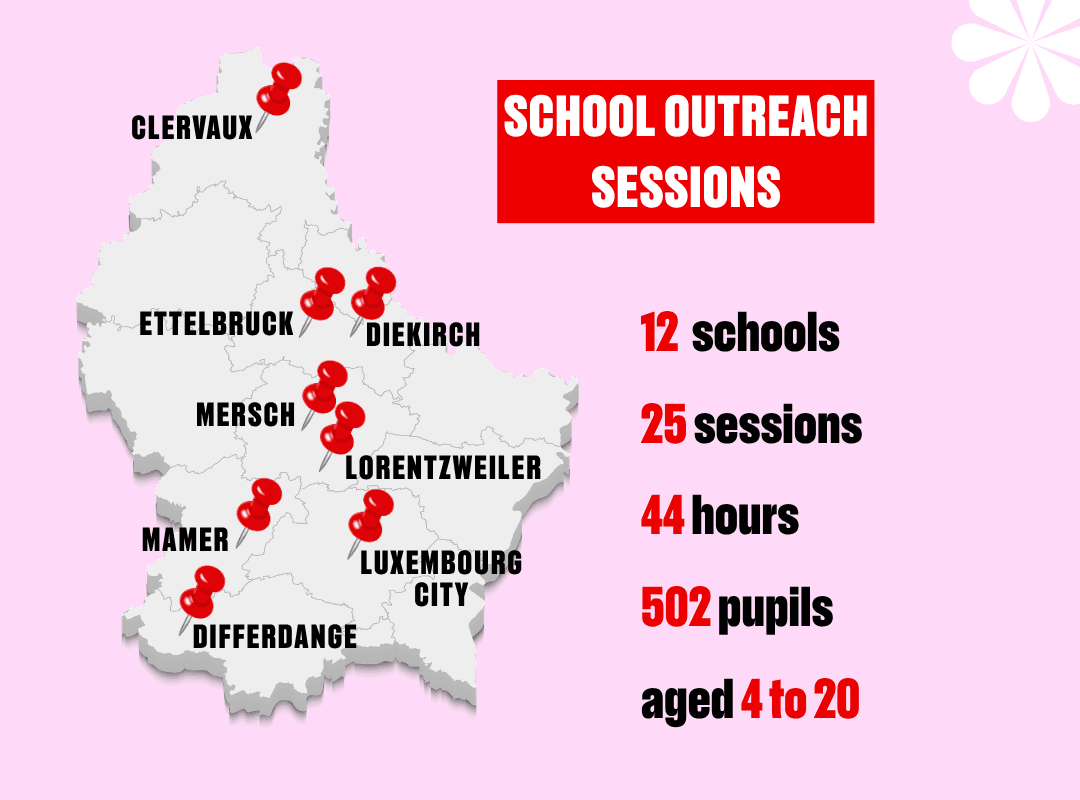
Of these, 502 pupils took part in 25 school outreach sessions organised across 12 schools. The remaining pupils met MSF at its Grande Expo at Neimënster in March 2026 and during its participation in the Science Festival in November 2025.
Beyond the figures, these events shared a common aim: to create spaces for dialogue where young people can understand humanitarian issues, ask questions and reflect on their own role in an interdependent world.
At the heart of humanitarian action
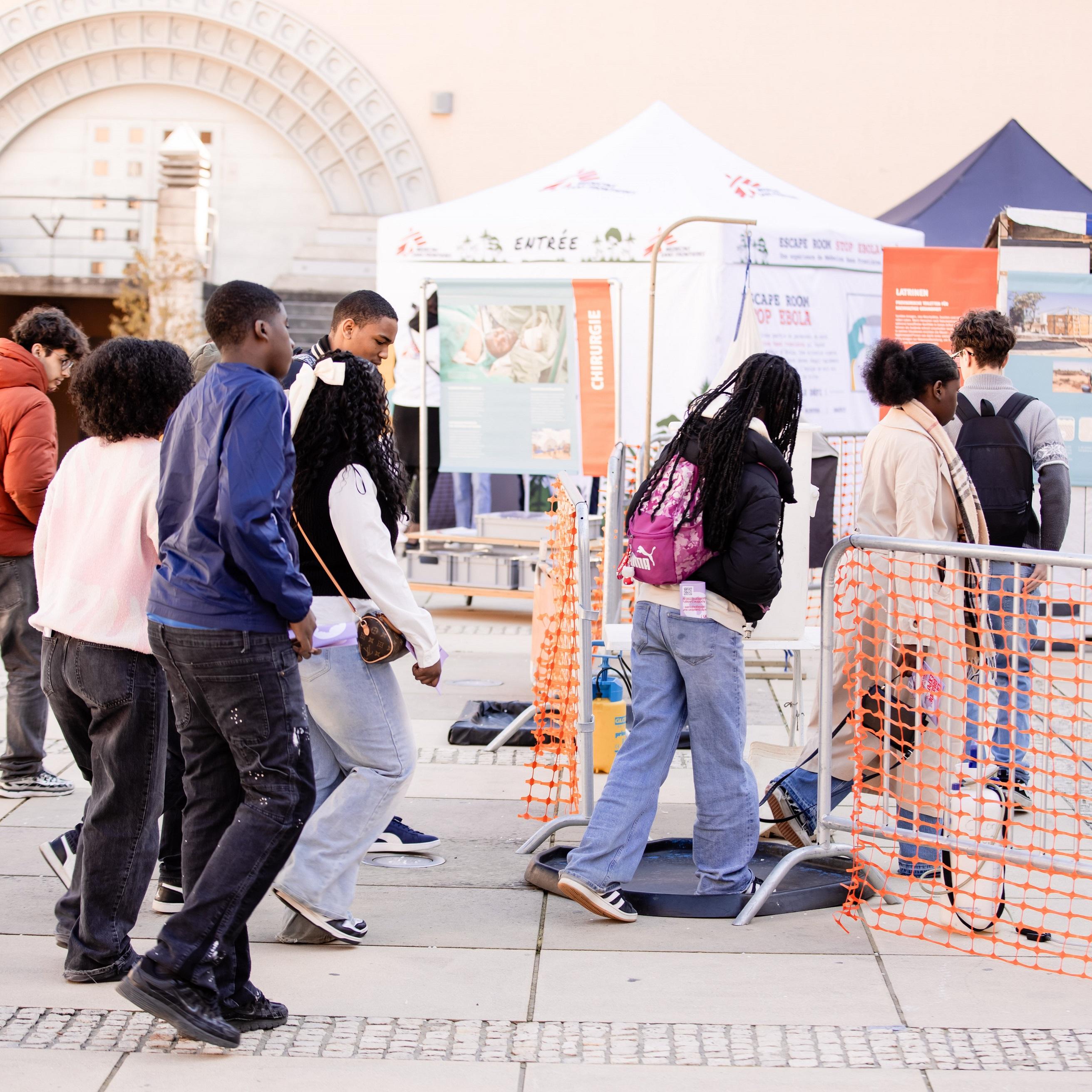
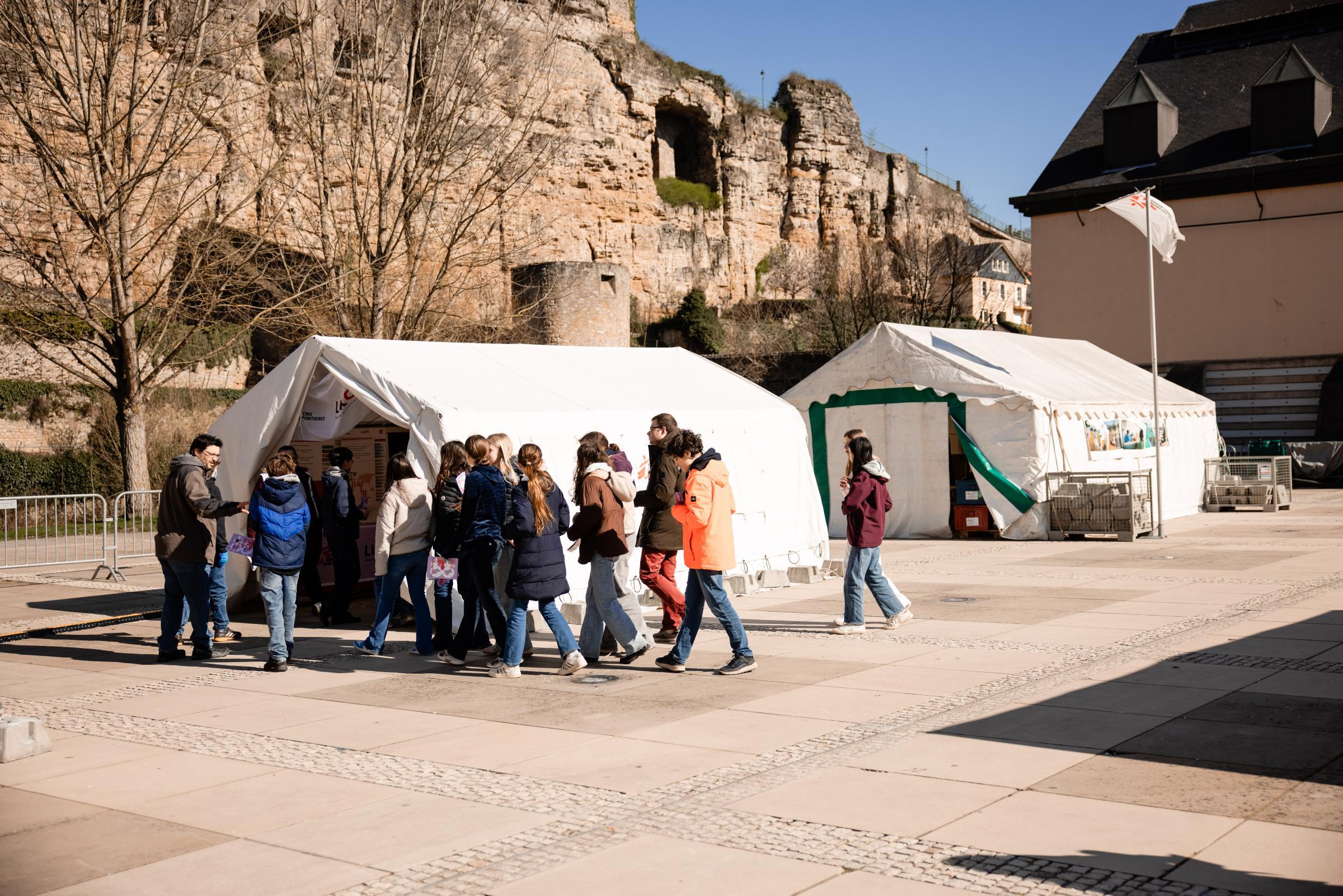
A highlight of the year, the MSF Grand Expo enabled more than 750 pupils to discover humanitarian work through an immersive experience. The tours, offered in French, English and German, were tailored to the pupils’ year groups and led by MSF staff who had taken part in international projects.
This interactive approach also made a lasting impression on the teachers.
"Die engagierte Ärztin, die die Führung gemacht hat, hat die Schüler trotz des extrem schlechten, kalten Wetters voll mitgerissen, das war super!"
‘The dedicated doctor who led the guided tour managed to captivate the pupils despite the extremely bad and cold weather – it was brilliant!’
The pupils were able to handle equipment used in the organisation’s projects – including therapeutic foods such as Plumpy’Nut and equipment related to the cold chain, access to water and the construction of latrines – and gain a very practical understanding of the challenges faced during medical interventions.
Another teacher emphasises how naturally this experience fitted into her curriculum:
"It was very interesting. The guides were amazing. The topics were just perfect for the Integrated Science syllabus about diseases and health. Everything was just perfect and hopefully it taught my students that life can be very different from the life they know in Luxembourg."
By allowing visitors to see and experience the reality of humanitarian work first-hand, these visits foster understanding, empathy and solidarity, whilst providing resources that can be directly incorporated into school lessons.
Learning by doing
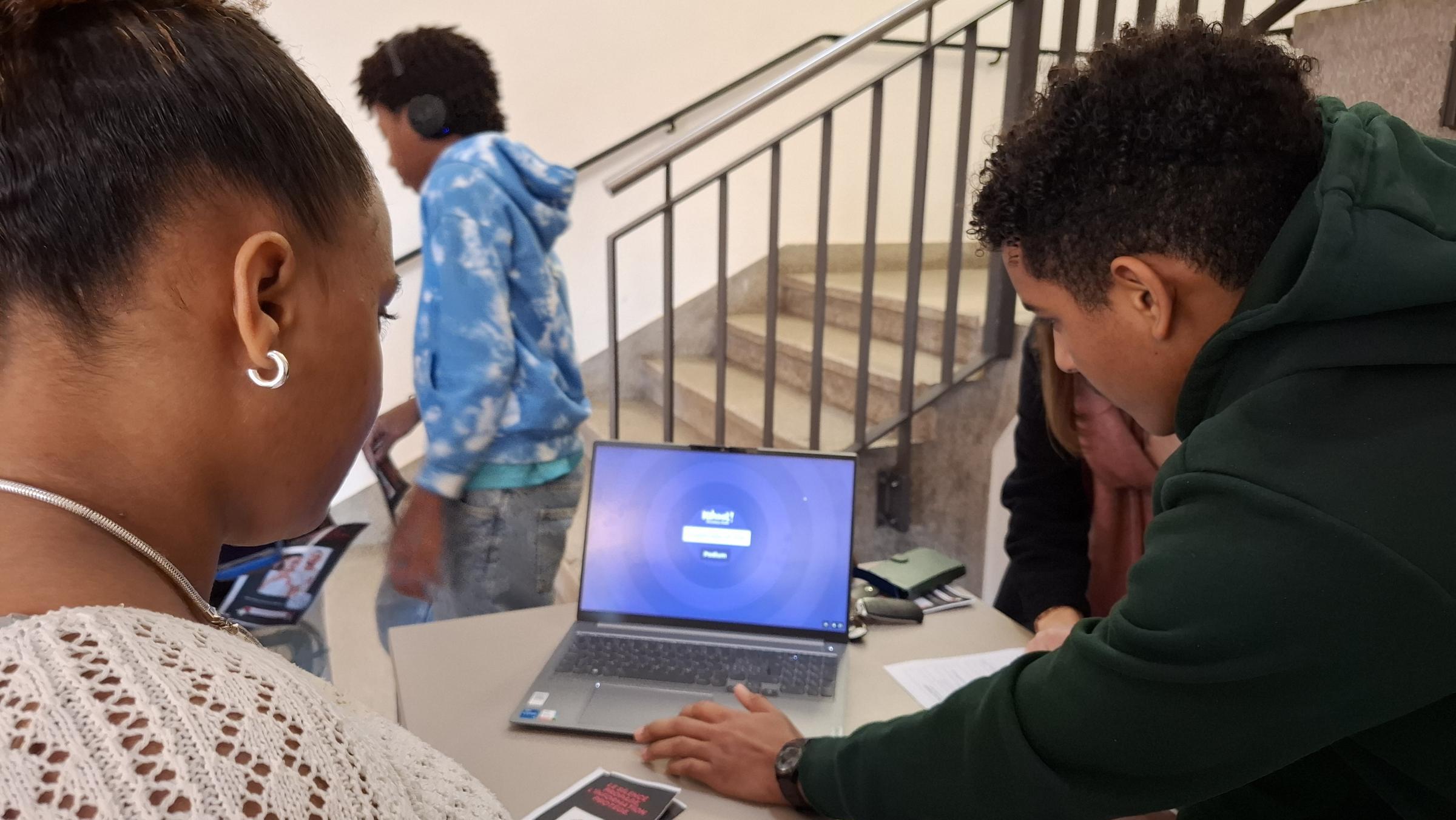
This desire to empower pupils is also reflected in the ‘Call To Action (R)éveil humanitaire’ initiative. Through a project competition format, pupils draw on skills from various disciplines to devise and implement their own awareness-raising initiatives.
Murielle Vandenhove, whose Clija class at the Lycée Classique de Diekirch won this year’s competition, explains:
“I made good use of the IT and French lessons. Some pupils, who were more comfortable with graphic design tools, were able to express themselves by creating leaflets and posters. This allowed everyone to show what they could do and to get involved. This approach adds a real element of project work and experimentation to more theoretical learning.”
The pupils themselves speak about what they’ve gained from this experience:
“I’ve learnt how to make leaflets that people actually want to read. Then you also have to explain the illnesses to others, hand out the leaflets and talk to people. I’ve learnt how social interactions work at school and on the street.” Handan
A range of tools to stimulate reflection
Throughout the year, MSF Luxembourg has developed educational programmes enabling young people to learn about humanitarian work in an interactive way.
During school visits, the teams offer presentations on topics such as water, sanitation and hygiene (WASH) – led by a specialist who has taken part in MSF projects – as well as on access to healthcare for people from the LGBTQIA+ community.
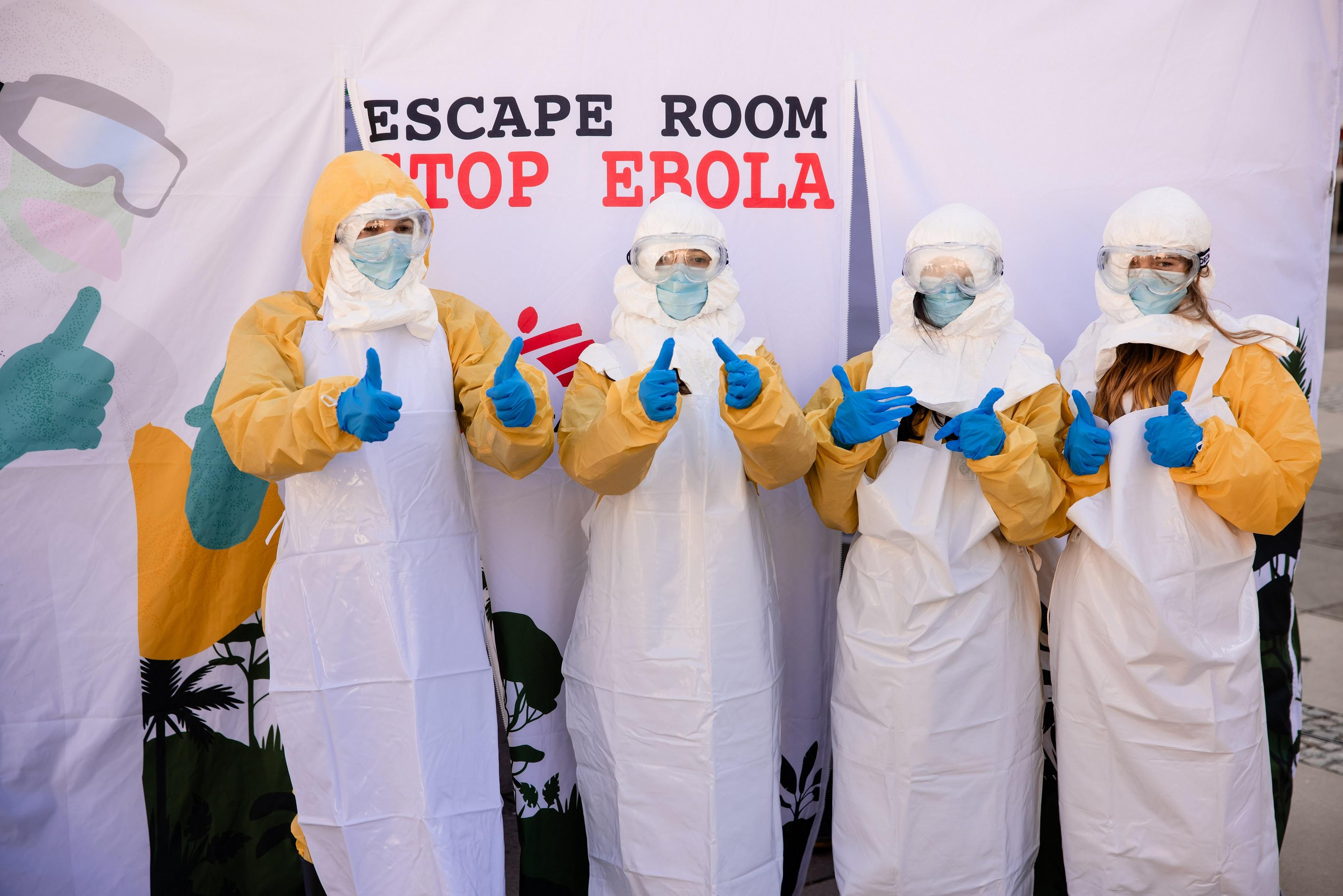
Last November, the organisation also took part in the Science Festival, where it showcased several educational tools such as Missing Maps and its ‘Stop Ebola’ escape game, which are also used during school visits.
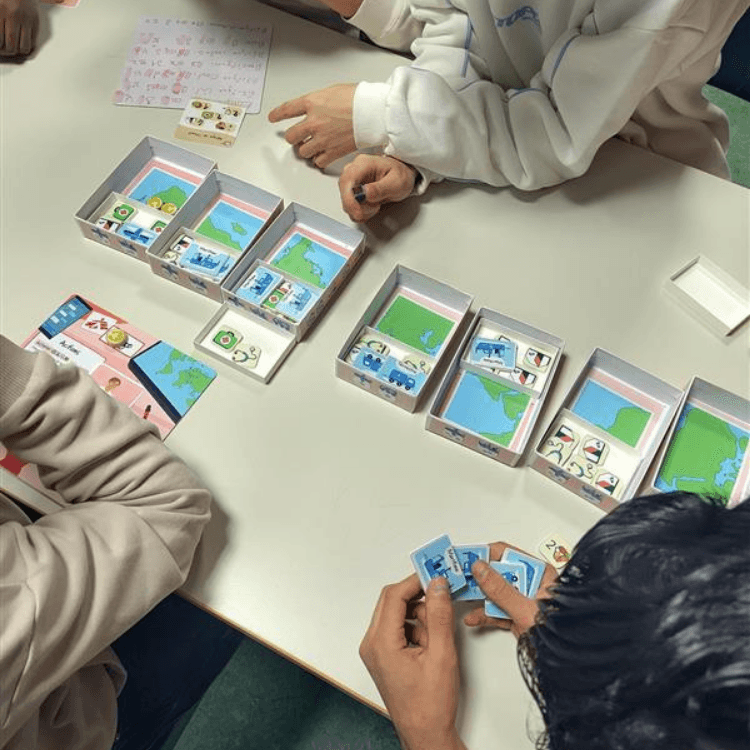
Finally, TimeRush!, a collaborative board game developed this year by MSF Luxembourg, allows pupils to step into the shoes of humanitarian teams facing the challenges of emergency response. Already used in 10 interventions since January, it offers a fun way to explore the complexity of humanitarian decision-making.
These activities are regularly incorporated into Sustainable Development Weeks, Diversity Days or other interdisciplinary projects carried out in schools.
Empowering citizens to take action
Through all these initiatives, MSF Luxembourg is fully committed to the approach to global citizenship education developed in Luxembourg and elsewhere. Presentations, personal accounts, workshops, collaborative games and group projects all share the same objective: to create the conditions for young people’s participation, expression and engagement.
Understanding humanitarian realities is just the first step. Empowering pupils to get involved, to reflect collectively and to take action at their own level enables us to go further: to make school a place where pupils learn not only to understand the world, but also to play their part in it responsibly, in a spirit of solidarity and collectively.
After a year full of encounters, exchanges and discoveries, the MSF Luxembourg team is already looking forward to returning to schools at the start of the new term to continue this awareness-raising work alongside young people.
Teachers, pupils, parents: please do not hesitate to contact us so that we can work together to develop new projects and introduce your classes to humanitarian work.