
Health, humanitarian aid and solidarity: 4 days of immersive activities at the 2025 Science Festival
In 1 click, help us spread this information :
On 22 and 23 November for the general public, then on 24 and 25 November for school groups, the MSF Luxembourg team took over the forecourt of neimënster to raise awareness among the Luxembourg public about our international missions and current humanitarian issues.
Through hands-on activities and educational games, young and old alike were able to discover the diversity of our work.
We would like to warmly thank everyone who came to talk to us: your interest and curiosity are essential to supporting our work with people affected by conflict, epidemics, disasters or denied access to healthcare
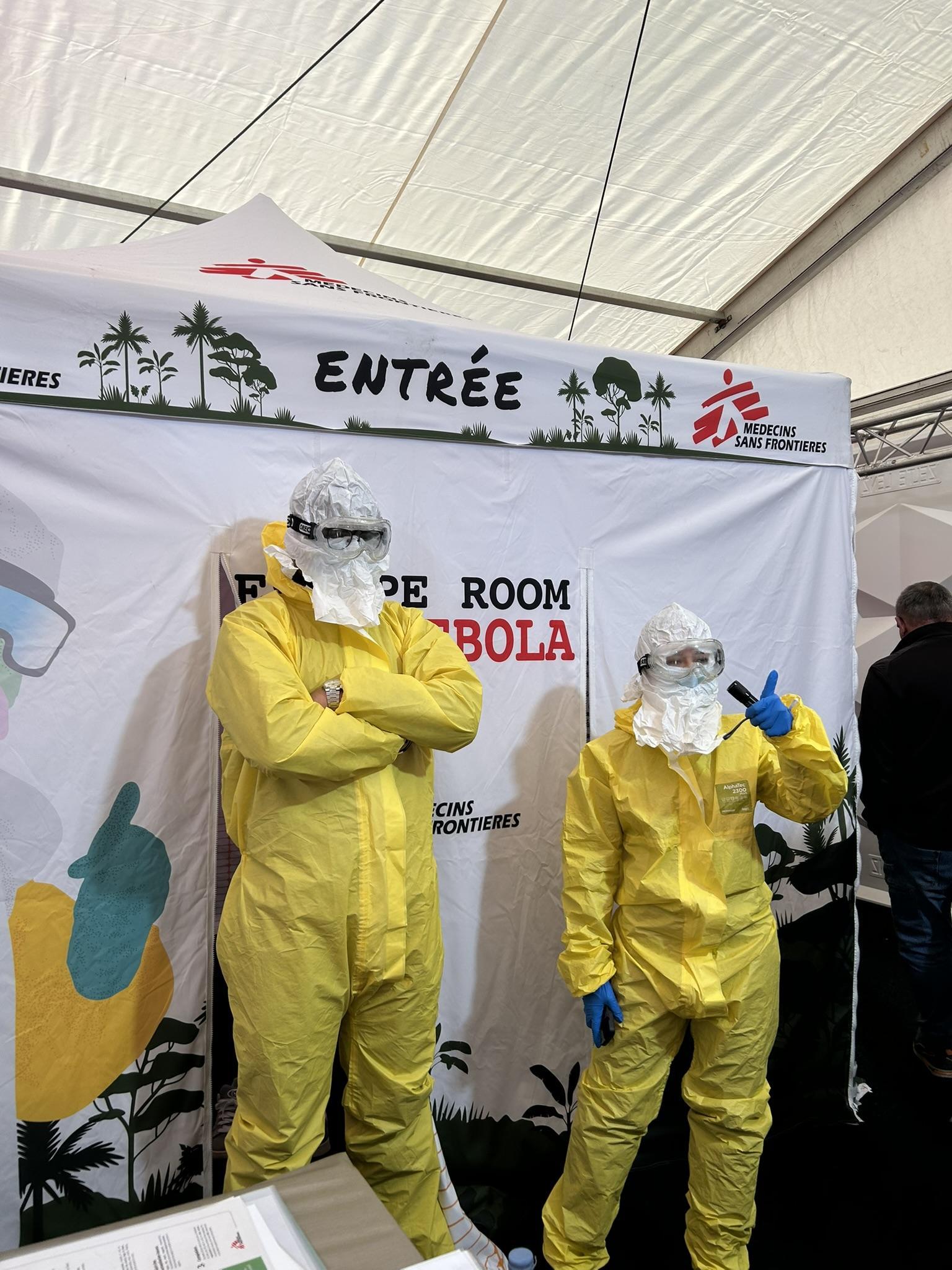
Escape Room ‘Stop Ebola’: immersion in the heart of an epidemic
Presented to the general public for the third time, our ‘Stop Ebola’ escape room was once again a huge success.
This educational tool takes the public behind the scenes of an emergency medical response to an Ebola epidemic.
Working in teams, participants had to:
- gather personal protective equipment (PPE),
- follow the mandatory steps before entering the “high-risk zone”, where patients are tested and treated,
- understand the constraints of a highly infectious disease.


Missing Maps and MapSwipe: mapping to better respond to crises

Launched in 2014, the Missing Maps project mobilises thousands of volunteers every year during mapathons, where everyone can contribute to improving the cartographic data essential to humanitarian operations.
The Missing Maps board game enabled visitors to the Science Festival to discover the importance of humanitarian mapping in MSF missions and to discuss the contexts of MSF's international interventions and actions.
In addition to the board game, we presented the MapSwipe app, a simple but effective tool for contributing to humanitarian mapping... directly from your phone.
An integral part of the Missing Maps project, MapSwipe allows anyone to locate, in just a few steps, areas where communities often invisible on maps live.
This work is essential: during a humanitarian crisis, knowing the location of the most vulnerable populations is fundamental to delivering food, medical care or shelter.
How does it work?
- Download the app or log on to the website, choose an MSF mission.
- Look at a satellite image.
- Tap once on the image if you see a building, twice if you think you see one but are not completely sure, three times if the image is not of sufficient quality.
- Then move on to the next image!
Every tap helps MSF to identify inhabited areas more quickly, enabling volunteer cartographers to complete the maps with greater accuracy on OpenStreetMap. It's a simple, accessible and ideal way to turn wasted minutes spent travelling, for example, into a contribution to a good cause!
Manual activities: creating, drawing, thinking
For younger children, we offered workshops on creating badges, with or without designs inspired by MSF's humanitarian missions. This was a fun way to raise awareness and reflect on the actions of the medical teams involved in our projects and the values of solidarity upheld by MSF.

