
Ten years after the Calais ‘Jungle’, thousands of people seeking refuge remain trapped at the France-UK border
In 1 click, help us spread this information :
The dismantling of the Calais ‘Jungle’, one of Europe’s largest informal settlements, began a decade ago, on 24 October 2016. Thousands of people seeking refuge had been surviving there in the hope of crossing the Channel to reach the United Kingdom. Ten years on, France’s northern coastline remains a transit point for many men, women, and children who, after often long and dangerous journeys, find themselves trapped at the border between France and the United Kingdom (UK), living in degrading and unsanitary conditions that have serious consequences for their health.

From 2015 to 2016: the largest informal settlement in Europe in Calais
In 2015, thousands of people fleeing armed conflict, extreme poverty, and persecution in the Middle East and Africa sought refuge in Europe. That year, more than one million women, men, and children arrived on the continent, travelling mainly from Turkey towards the Greek islands and across the Mediterranean Sea to Italy.
The entire northern coastline of France had long been a transit route for people seeking refuge who hoped to reach the UK. In 2015, a vast informal settlement had grown up in Calais. Then nicknamed “the Jungle,” from the Pashto word “jangal,” meaning “forest,” used by some Afghan and Iranian refugees to refer to makeshift camps, the site housed up to 10,000 people in 2016, according to aid organizations.

In October 2016, the French authorities decided to dismantle the settlement. Bernard Cazeneuve, then France’s Interior Minister, promised a ‘comprehensive strategy to prevent another large encampment from taking shape’.
On 24 October 2016, French police began evacuating thousands of people, captured on cameras from around the world.

Ten years later: who are the exiles and refugees on the northern coast?
Ten years later, France’s northern coastline remains a transit point for people seeking refuge trying to reach the UK. In a survey conducted in the summer of 2025 by the UN Refugee Agency (UNHCR) on the situation of refugees and migrants in Calais and Dunkirk, a majority of those interviewed said they had fled their countries because of armed conflict or widespread violence (53 per cent). Nearly half also reported fleeing political, ethnic, or religious persecution (47 per cent).
These often-overlapping reasons for flight indicate that a significant proportion of respondents may be in need of international protection. Seven in 10 of those interviewed came from Sudan, Eritrea, Afghanistan, Ethiopia, or Somalia.
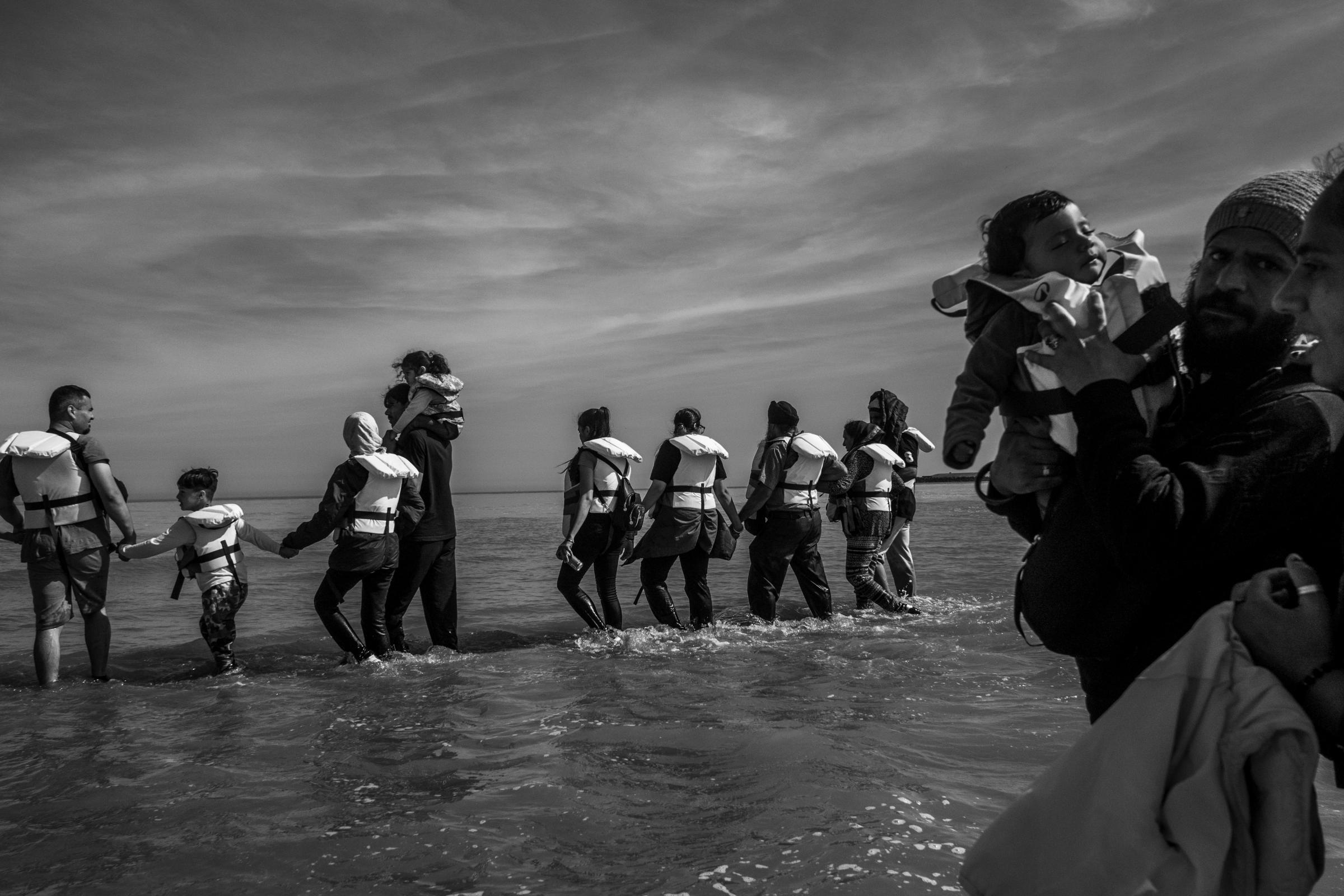
Meanwhile, European Union member states and their partners continue to pursue increasingly restrictive and violent migration policies. With almost no safe and legal routes available to people seeking refuge who wish to reach the UK, attempts to cross the Channel in makeshift boats (small boats) have multiplied over the past decade.
The "zero encampments" policy: the dispersal of camps from Calais to Dunkirk
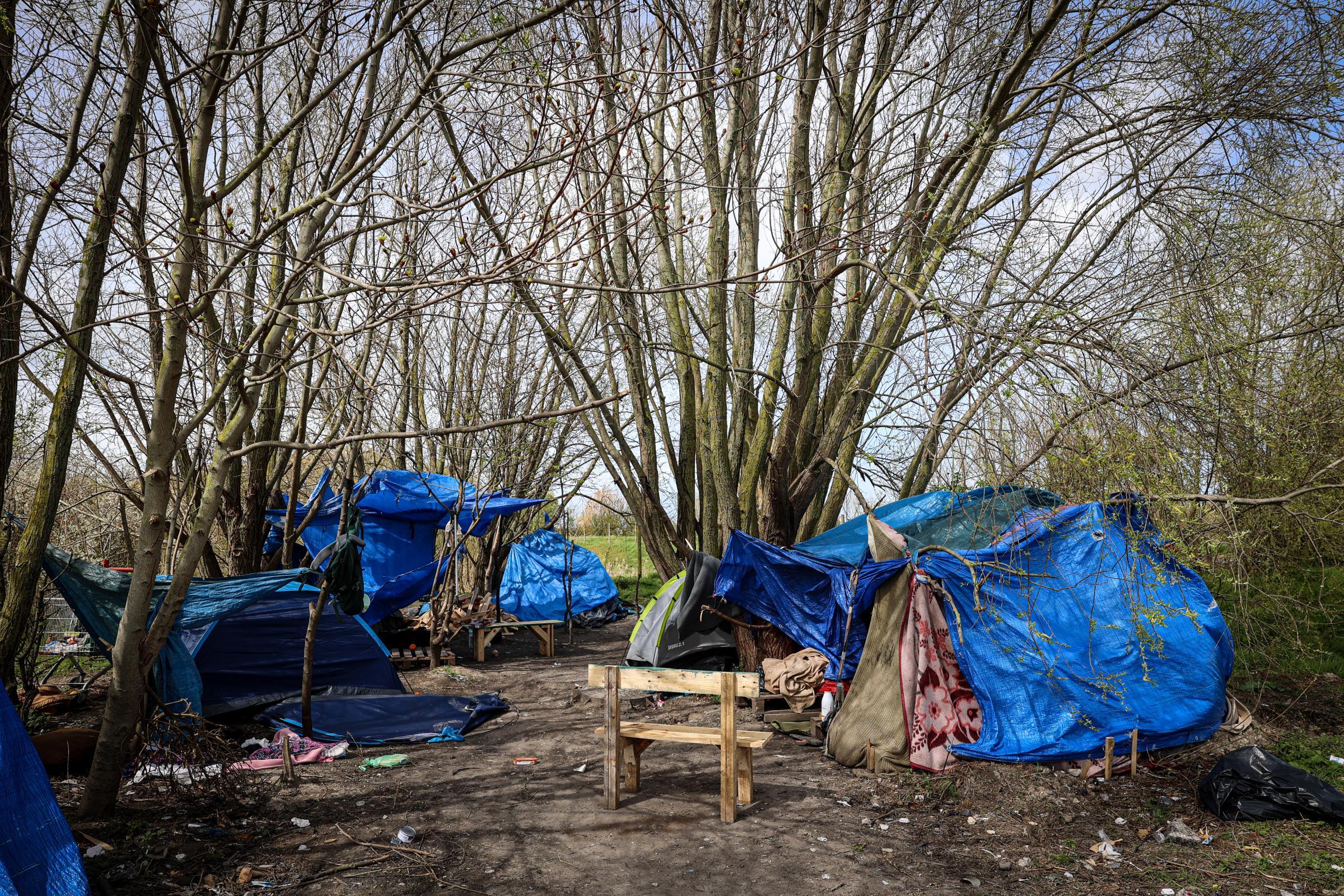
Today, there is no longer a single ‘Jungle’ in Calais. Instead, multiple encampments are scattered along France’s northern coastline as a result of the so-called ‘zero encampments’ policy (zéro point de fixation).
This policy aims to prevent people seeking refuge from gathering in a single location along the coast. It involves keeping accommodations and reception facilities away from where people are living and clearing makeshift encampments every 48 hours. These settlements are repeatedly dismantled and re-established because the authorities have failed to provide adequate accommodations.
As a result, people are pushed into unsanitary and dangerous areas, often close to major roads or railway lines on the outskirts of towns.
Health consequences and medical care for exiled populations
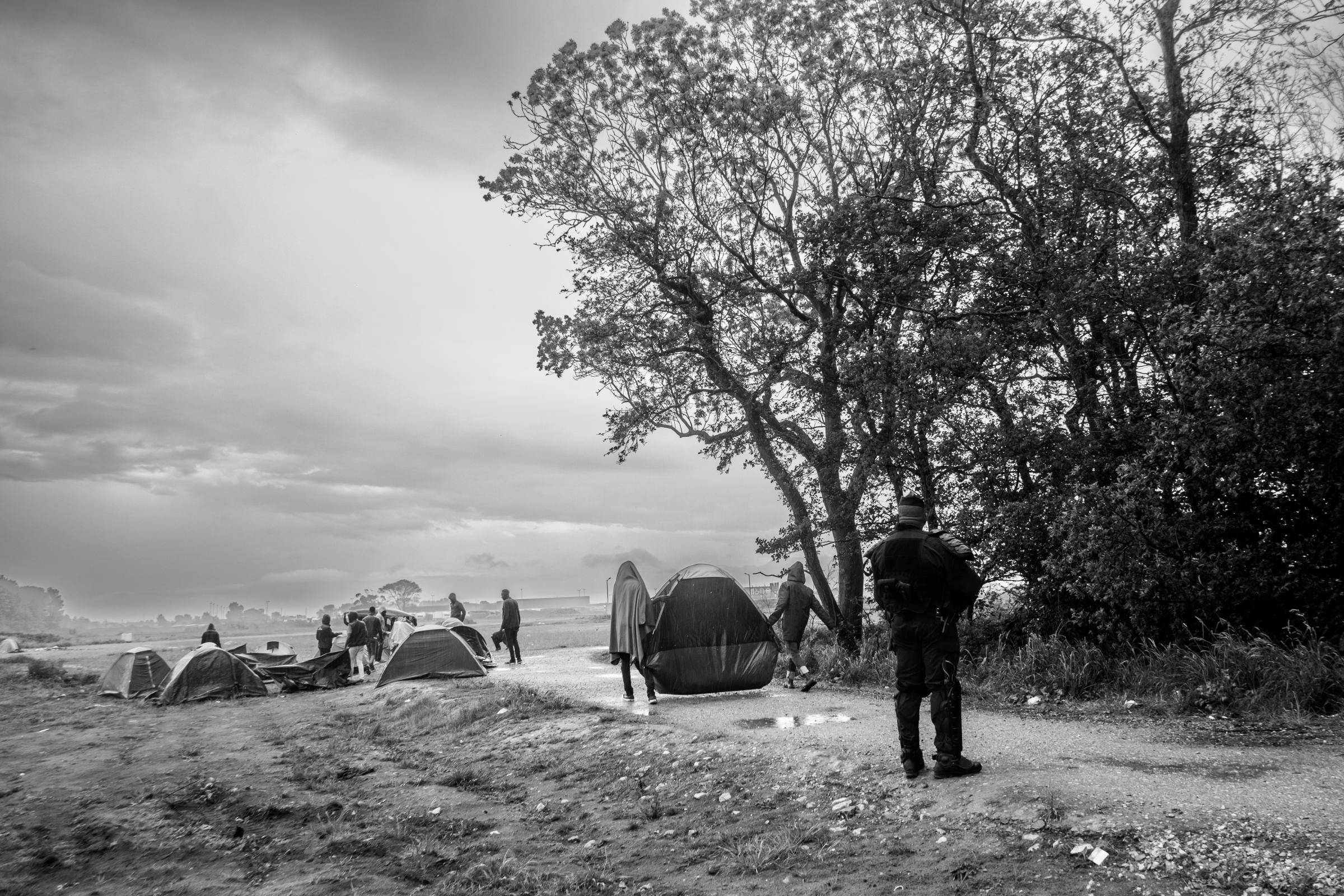
The proliferation of small encampments, scattered across remote areas, makes it extremely difficult to identify people in need of medical care and for organisations, including MSF, to reach them. Living conditions are also appalling and contribute to a wide range of physical and psychological health problems.
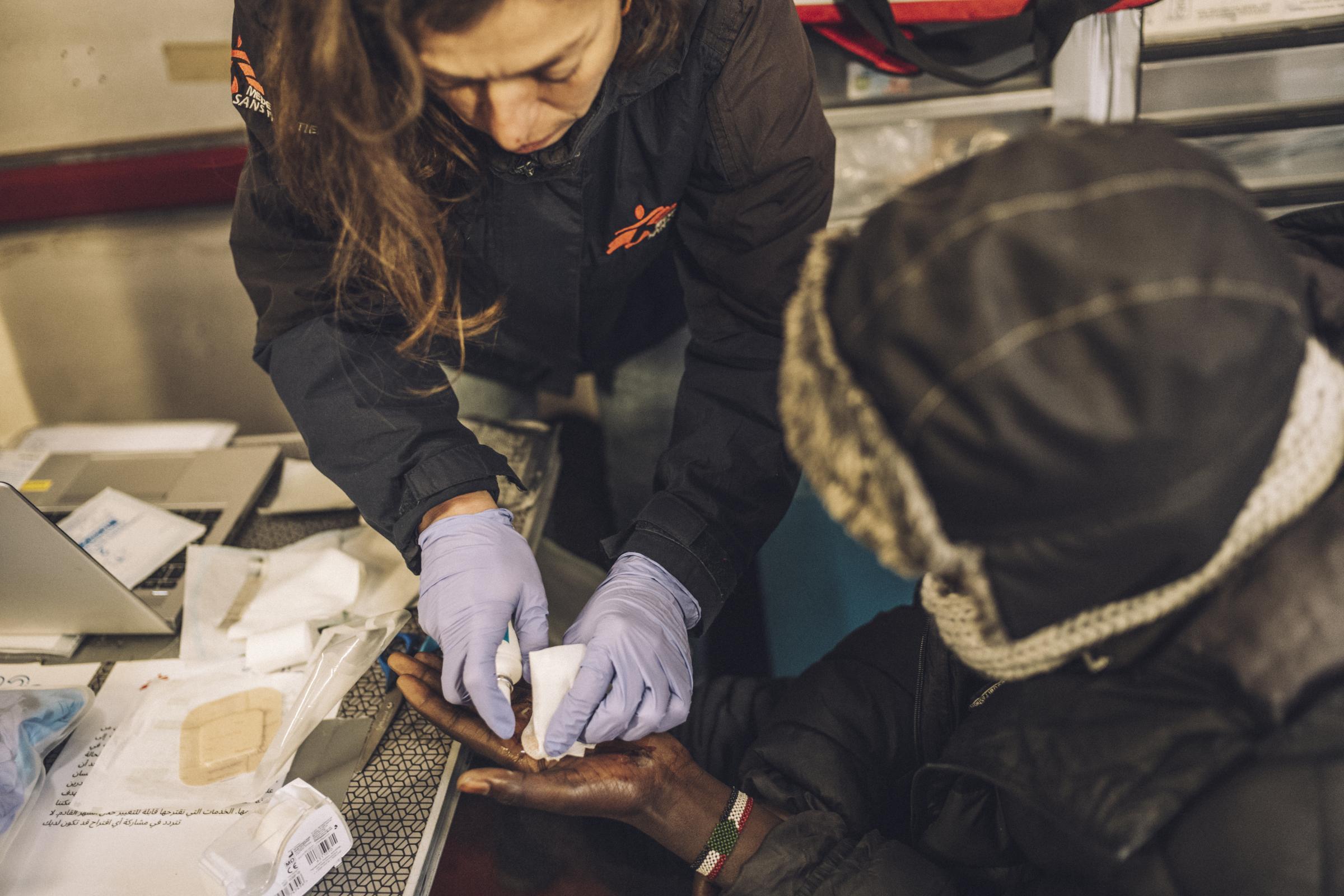
Patients seen by MSF teams in Calais and the Dunkirk area regularly experience psychological distress including sleep disturbances, anxiety, depressive episodes, post-traumatic symptoms, avoidance behaviours, phobias, and hypervigilance.
Living in a constant state of alert, never being able to rest, having to hide, and sleeping on the bare ground all have a profound impact on people’s mental health.
Living conditions are one of the three main stressors identified among MSF patients at the France-UK border, alongside shipwrecks and the loss of a loved one.
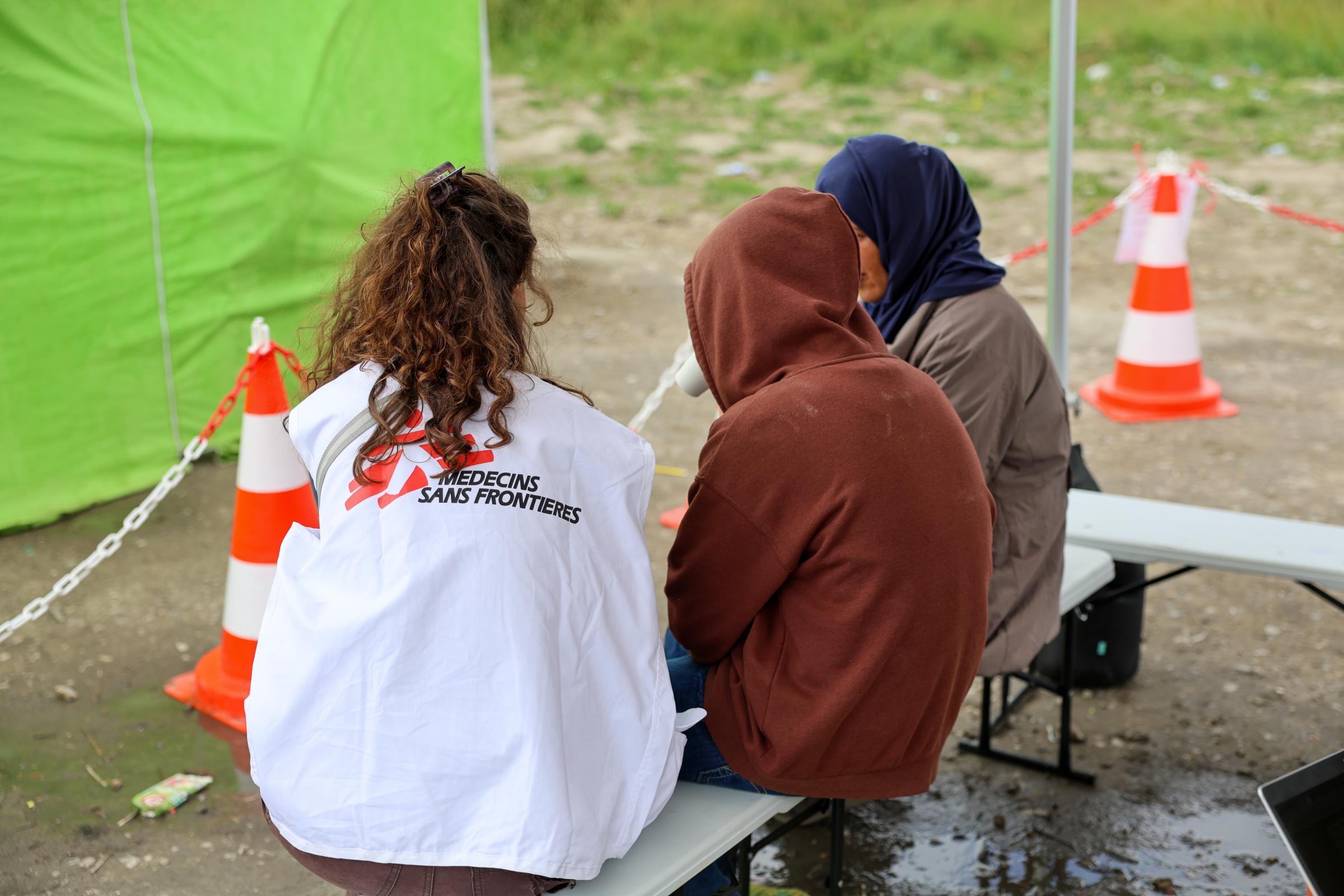
In recent years, organisations working along France’s northern coastline have also observed an increasing number of women and unaccompanied migrant girls in the Dunkirk area, where around 2,000 people are surviving in makeshift encampments far from town centres.
These women and girls remain largely overlooked by the authorities and have limited access to healthcare, particularly sexual and reproductive health services. Every week, an MSF mobile clinic visits them to provide gynaecological care and psychological support.
Ten years of human rights abuses
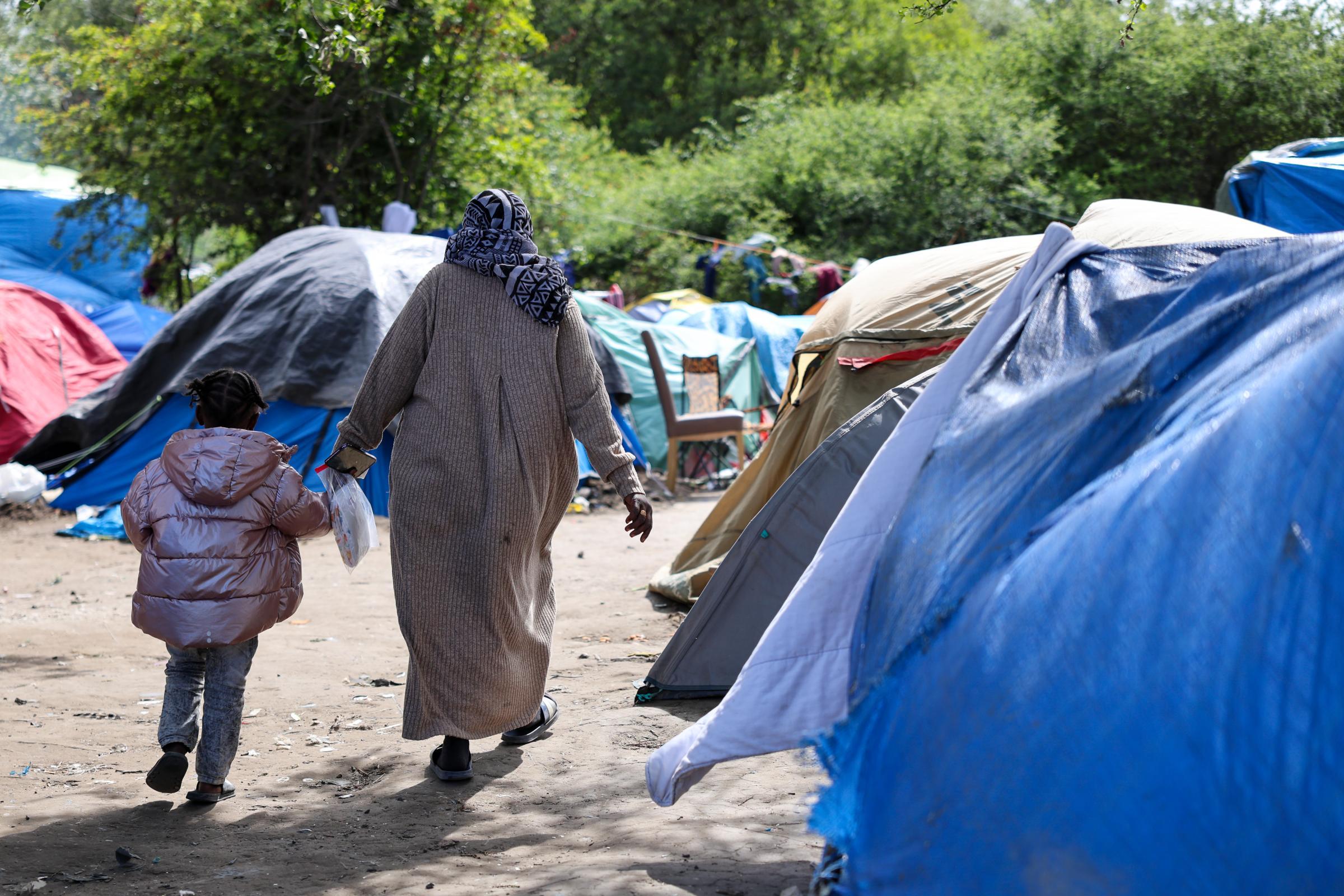
The decade since the dismantling of the ‘Jungle’ illustrates the brutality of migration policies pursued by France, the UK and, more broadly, European Union member states. These policies do not deter people seeking refuge from attempting to reach the UK. Instead, they force them into extreme precarity, undermine their health, and compel them to undertake increasingly dangerous journeys, putting their lives at risk.
In February 2026, Camille Niel, Head of MSF’s France mission, gave evidence to a French parliamentary inquiry examining the consequences of migration policies at the France-UK border. She warned:
We are now witnessing an alarming situation: In mainland France, the northern coastline is the area where the rights of people on the move are most consistently violated and where they are least protected”.
A few months later, the inquiry’s conclusions were unequivocal: “The humanitarian response deployed along the coastline remains largely inadequate and ill-suited to the realities of migration journeys and the needs of the people present”.
The French parliamentarians added: “These difficulties stem from the so-called ‘zero encampments’ policy, which aims to prevent permanent encampments from forming along the coastline. Although this objective is often justified by the desire to limit the area’s attractiveness, the available scientific evidence has never established a link between the presence of humanitarian services and an increase in migration flows”.
Ten years after the dismantling of the Calais “Jungle,” the conclusion remains inescapable: policies of harassment and deterrence have neither stemmed the flow of departures nor resolved the crisis; they have only exacerbated the plight of already deeply vulnerable populations. Médecins Sans Frontières continues to call on France and its European partners to end the “zero encampments” policy, to create safe and legal pathways, and to guarantee dignified reception and unconditional access to healthcare for all exiled people.