
Refugees in Burundi in dire need of support
In 1 click, help us spread this information :
According to the UN Refugee Agency (UNHCR), more than 88,000 refugees have fled to Burundi since the recent escalation of violence in South Kivu province, in Democratic Republic of Congo. People face dire living conditions in the camps, with limited access to clean water, food, hygiene and basic needs, as people kept arriving during the last days.
Médecins Sans Frontières (MSF) is expanding its emergency response and warn about the risk of spreading of epidemic diseases such as cholera and measles, and a catastrophic increase of malaria cases among people made vulnerable in the midst of this crisis.
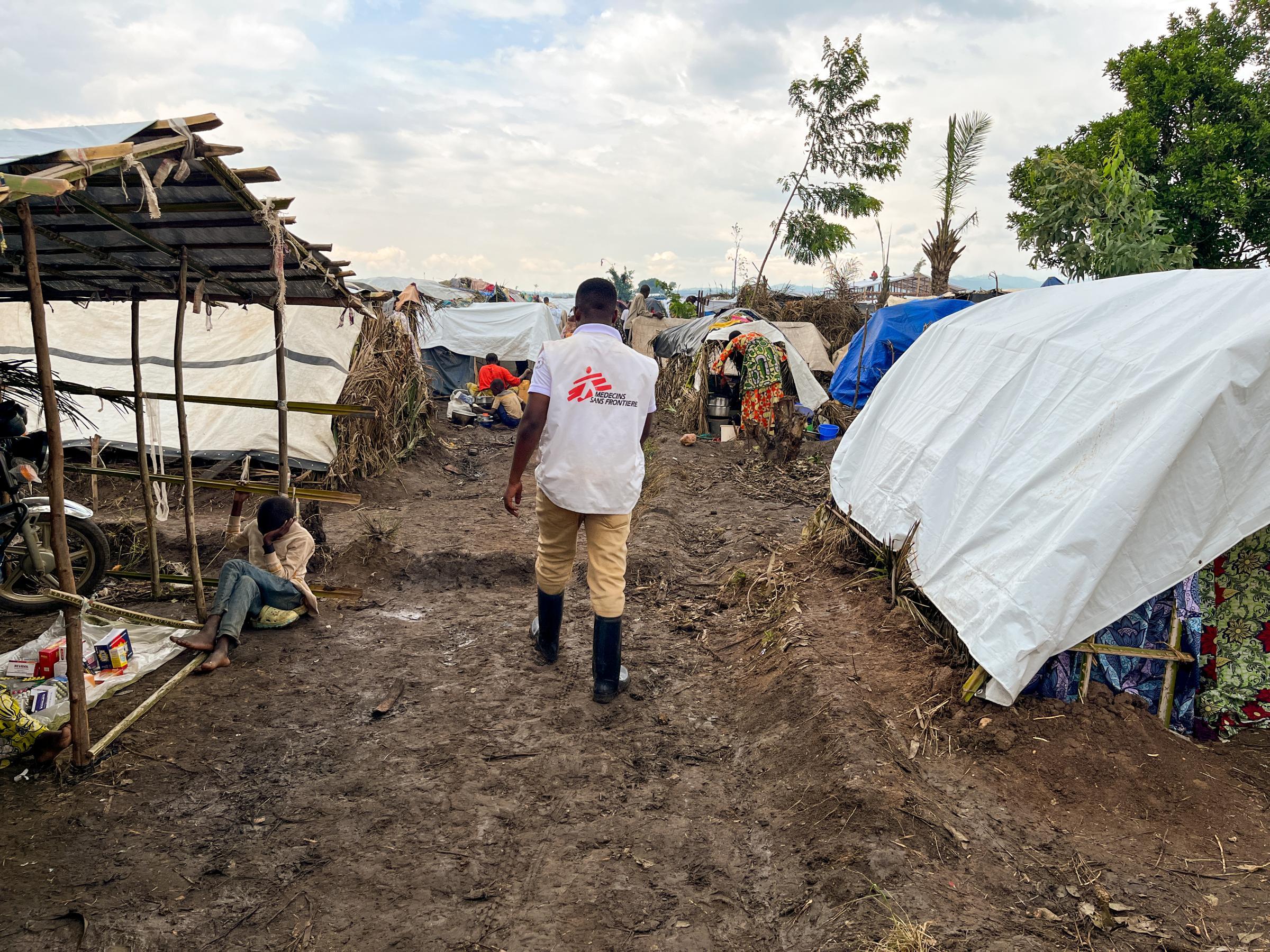
The camp is saturated, you can see a few families sharing the same tent, and the ground is covered in mud. We see people holding two-litre water bottles and this is all they have to cover their water needs; food is almost unavailable. We fear a worsening of the health and humanitarian situation,” explains Zakari Moluh, MSF project coordinator describing the situation in Ndava site in Cibitoke, northwest of Burundi.
Since the arrival of Congolese refugees two weeks ago, MSF started expanding our activities to provide medical and humanitarian support. Around 37,000 people crossed the Rusizi River and sought refuge in Ndava site, where MSF is treating an average of 200 patients every day in our mobile clinic. Complicated cases are referred to Cibitoke district hospital, where a team ensures continuity of care. MSF team is also providing 25,000 litres of water a day and building latrines and showers to reduce disease risks associated with lack of access to basic hygiene needs.
We see people in a state of distress, despair and exhaustion. We see women who gave birth while fleeing, some that give birth in our clinic. Forty-two per cent of malaria tests carried out during the last days were positive. In Ndava camp, we’ve treated 14 confirmed cases of cholera and have seen one suspected case of measles,” says Moluh.
Around 29,000 people have arrived at the Bweru long term camp site in eastern Burundi, where they receive assistance from authorities and international humanitarian organizations. MSF is supporting a cholera treatment centre with a capacity of 50 beds as the disease is spreading, and logistical support. Health risks are concerning in these crowded living conditions. Support for sexual and reproductive health as well as care for survivors of sexual violence are among primary needs.
MSF is scaling up its emergency medical response across the country with support for cholera and measles, vaccination, and water and sanitation.
With the political and security situation evolving rapidly in DRC, refugees face much uncertainty. Authorities and organizations present in Burundi face overwhelming needs. People need an immediate mobilization of humanitarian organizations to provide vital healthcare and other essential support.