Burundi

In Burundi, Médecins Sans Frontières (MSF) implemented a strategic approach to reducing malaria cases in Cibitoke province. We also assisted Congolese refugees and responded to several disease outbreaks.
Our activities in 2025 —

malaria cases treated

people treated for cholera

people treated for measles
In 2025, MSF collaborated with the Burundian health authorities on a lifesaving malaria prevention initiative in Cibitoke, which involved administering vaccines and malaria prevention drugs, and distributing mosquito nets. We carried out research to assess the impact of the initiative, and reported a 40 per cent drop in severe malaria cases at Cibitoke district hospital compared with the same period in 2024.
To increase our support to communities in Cibitoke, we drilled two boreholes to provide clean water. We also installed a solar power station at the hospital to ensure the continuity of care.
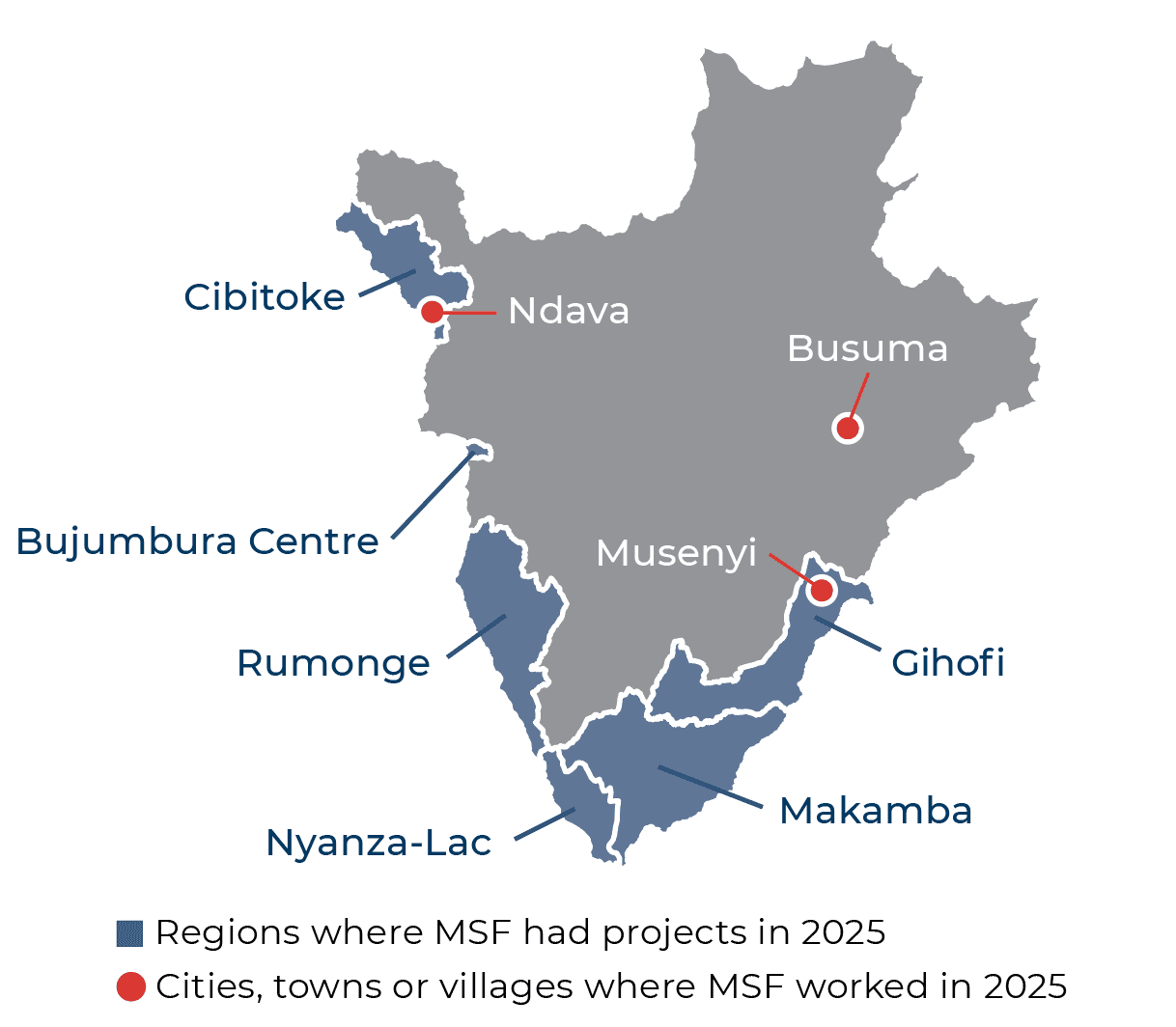
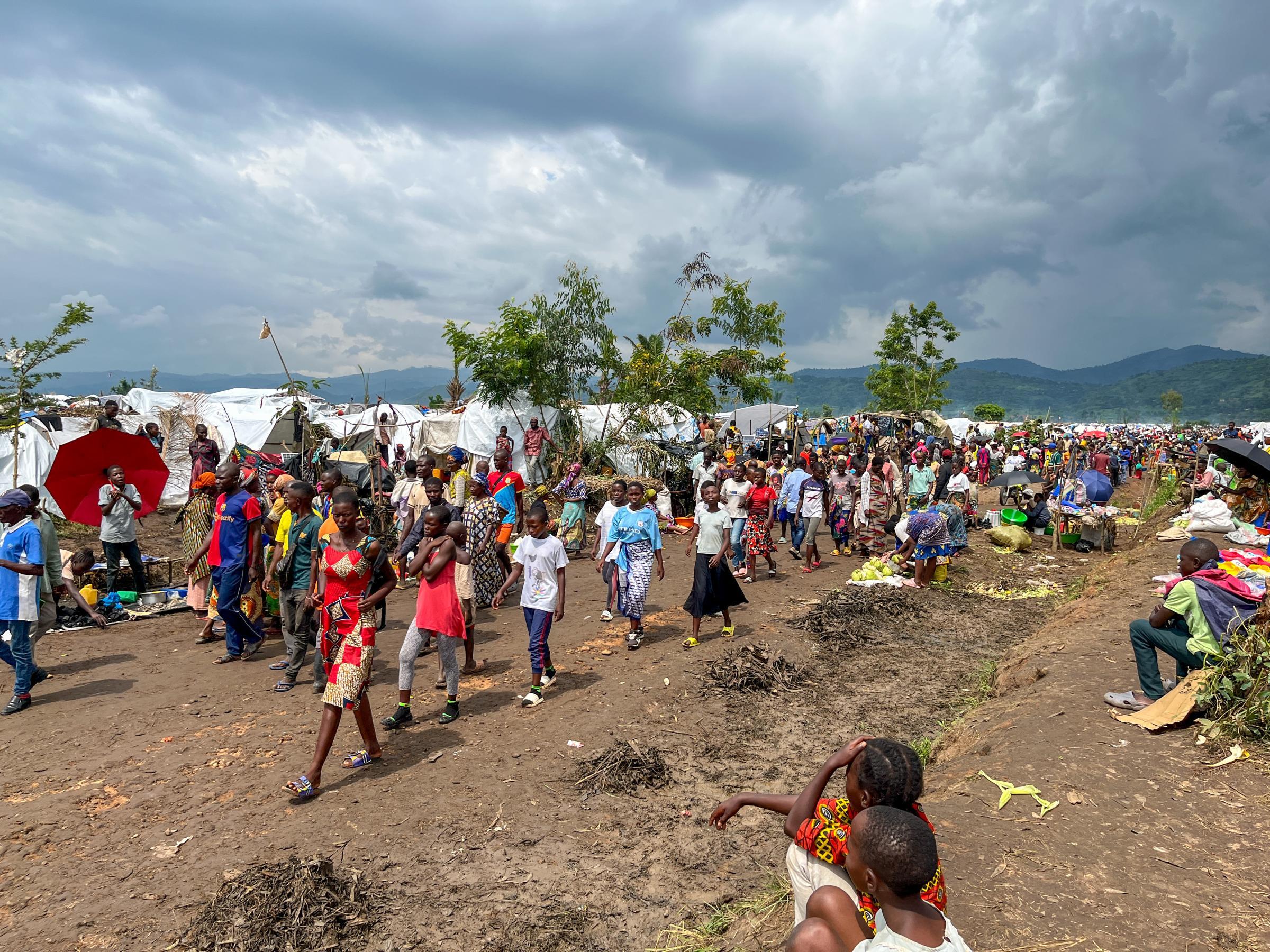
In early 2025, thousands of refugees from the war in the Democratic Republic of Congo (DRC) arrived in Burundi. MSF teams supported the refugees both in Cibitoke and in the designated Musenyi site in Burunga province, where around 18,000 people were living in precarious conditions by the end of April.2 In Musenyi, we provided outpatient care and measles vaccinations for children, as well as treatment for, and mosquito nets to prevent, malaria. In Rugombo, Cibitoke province, we responded to a cholera outbreak and installed oral rehydration points.
During the year, we also responded to cholera outbreaks in Bujumbura and in NyanzaLac health district, in southern Burundi, in August and November, respectively.
In December, over 100,000 people fled over the border from South Kivu, DRC. Our teams launched an initial response in Ndava transit camp providing healthcare and distributing relief items, then we collaborated with the authorities in Busuma camp, where most of the refugees were moved to, by supporting a cholera treatment centre, running a general healthcare clinic, organising specialist referrals, and distributing water.