
 LebanonIranPalestineIraqMSF’s response to conflict in the Middle EastPress releases
Escalating conflict in the Middle East-wide region: MSF adapts its programmes and prepares to scale up
In 1 click, help us spread this information :
Amid the sharp escalation in Middle East violence, bombing has killed, injured and displaced people.
MSF teams in Lebanon and Iran are adapting activities in response, while scaling up as possible.
We urge for the protection of civilians and all medical infrastructure.
Médecins Sans Frontières (MSF) is alarmed by the dramatic escalation in conflict across the Middle East-wide region, following strikes by US and Israeli forces in Iran and Iran’s subsequent retaliatory actions in several countries. MSF is adapting its programmes to respond, and is closely monitoring the rapidly evolving humanitarian needs.
Dans toute la région, l'escalade de la violence instaure un climat de peur dans la vie de millions de personnes. Les bombardements se poursuivent dans plusieurs villes et villages, frappent souvent des zones densément peuplées, et le nombre de victimes ne cesse d'augmenter.
Across the region, the escalation in violence has brought fear to the lives of millions of people. Bombing continues across multiple cities and villages, often hitting densely populated areas, and casualties are mounting.
MSF calls for the protection of civilians, hospitals, health facilities, and other essential infrastructure at all times.
In Lebanon, thousands have been displaced. “The escalation in conflict comes after 15 months of a “ceasefire agreement” that never brought real safety for people in Lebanon,” says MSF Programme Manager Francesca Quinto.
The latest strikes and evacuation orders to all of Beirut’s southern suburbs and almost all of the south of the country are now forcing even more people to flee. And there is nowhere safe to go".
For many people in southern Lebanon and other areas of the country, evacuation orders mean reliving the trauma of displacement all over again. “Families who were slowly beginning to recover from previous fighting are being told to leave their homes. Some have been stranded on the roads with children, elderly relatives, and sick family members, facing extremely harsh conditions,” continues Quinto.
Our teams in both Iran and Lebanon are currently confirmed safe,
and we are monitoring developments and assessing how to provide support to the people affected. We have medical supplies in both countries ready to be deployed.
Before 28 February, when the escalation began, MSF had been running three projects in Iran, providing essential healthcare to marginalised people – including 6,000 medical consultations per month, as well as midwifery care, infectious disease screening and treatment, and mental health support. Although airstrikes have created operational challenges and despite the communication blackout, MSF has so far been able to continue some activities. Receiving information from our staff is however extremely difficult. Our clinic in Tehran remains temporarily closed due to heavy bombing, while our clinics in Mashhad and Kerman are still open, operating with reduced staff. Our teams are seeking authorization from authorities to scale up emergency care support in response to conflict-related needs (opening our clinics 24/7 and supporting the local health systems) and are awaiting a response.
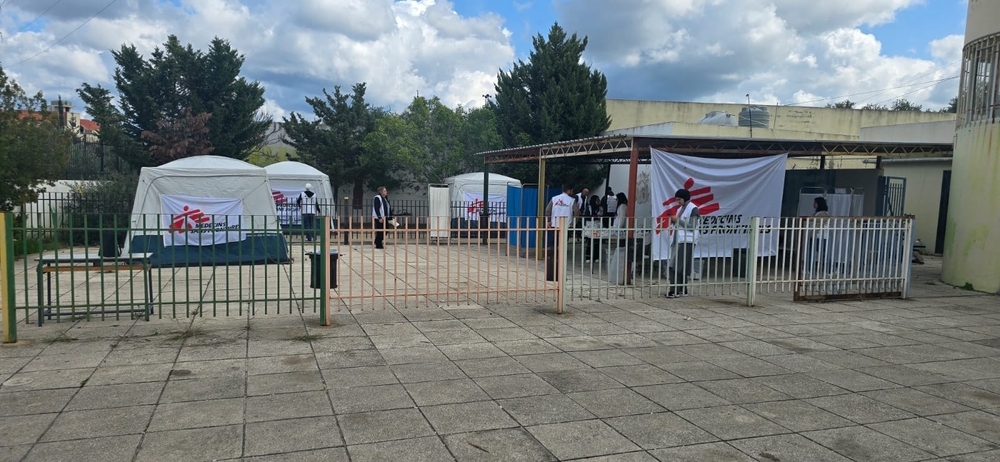
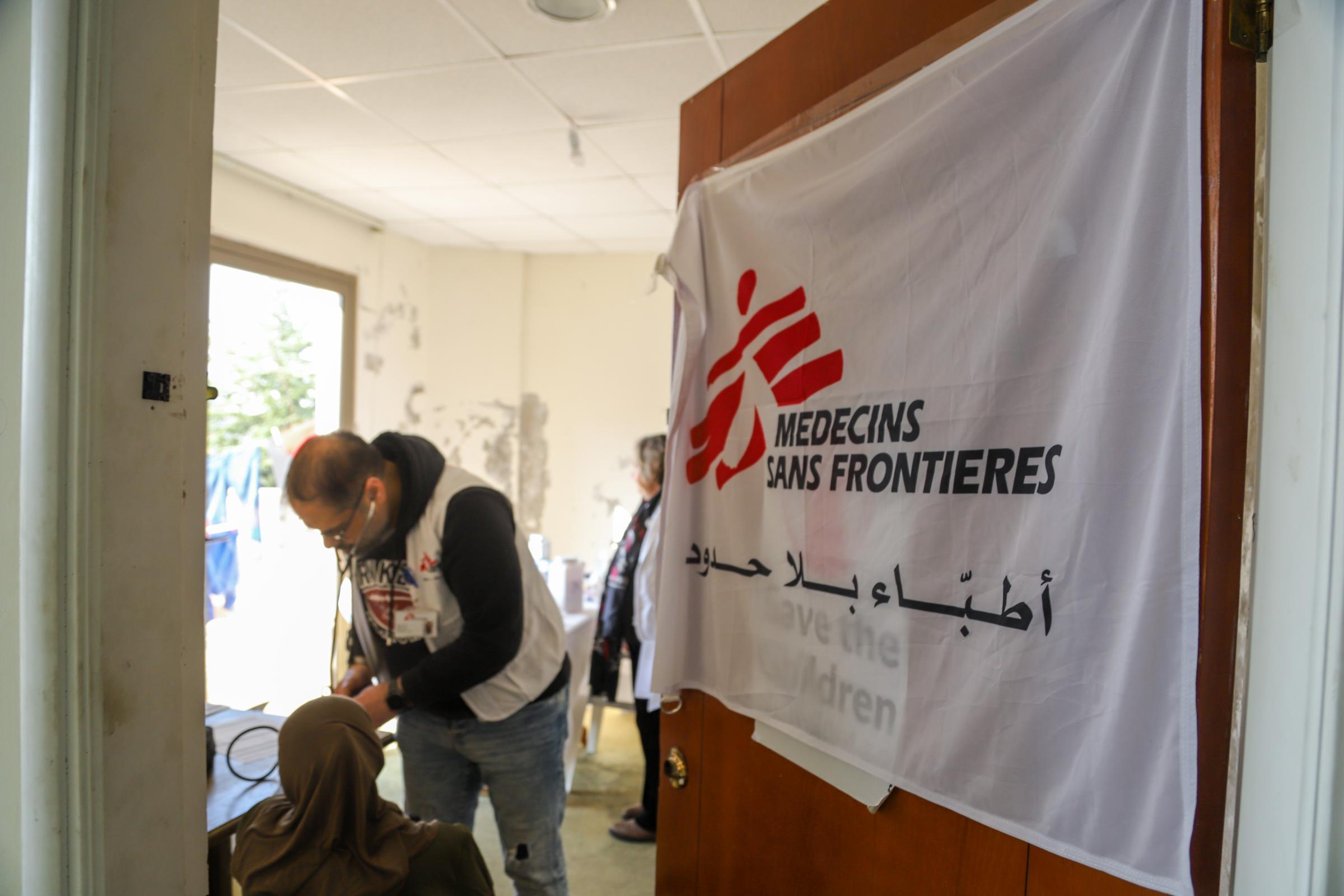
In Lebanon, our teams are adapting activities to respond to the emerging needs of displaced people, while ensuring continuity of care across our regular projects in the country. Since 4 March, a mobile clinic has been providing medical consultations and psychological first aid in Saida, southern Lebanon, where some shelters have exceeded capacity. We also started providing shelters in Beirut with clean water and conducting assessments in Beirut, Rashaya and other areas to scale up mobile clinics and supplies. We are in touch with the relevant authorities to provide additional support where needed.
Elsewhere in the region, our teams in Gaza and the West Bank continue to address the significant medical and mental health needs. In Iraq, MSF has medical supplies available to be deployed in the region if needed.
MSF activities in Iran and Lebanon
Iran
MSF travaille en Iran pour combler les lacunes en matière de santé parmi les communautés marginalisées, notamment les réfugié·e·s afghan·e·s et d'autres populations vulnérables. Dans le sud de Téhéran, où MSF a lancé un projet en 2012, les équipes fournissent des soins complets de santé générale grâce à une clinique fixe, des cliniques mobiles et des activités de sensibilisation. Les services comprennent la prise en charge des maladies infectieuses et non transmissibles, la santé sexuelle et reproductive, la santé mentale et le soutien psychosocial, le traitement des plaies, le dépistage et le traitement de l'hépatite C, l'orientation vers des soins hospitaliers, ainsi que des activités de promotion de la santé. À Mashhad, près de la frontière afghane, MSF est présente depuis 1996 et gère des cliniques mobiles qui fournissent des consultations médicales et psychologiques. Elles dépistent les maladies infectieuses parmi les groupes vulnérables, parallèlement à des services dans le district de Golshahr pour les réfugié·e·s afghan·e·s, qui comprennent des conseils, une éducation à la santé, un soutien social et des orientations vers des soins spécialisés.
MSF works in Iran to address healthcare gaps among marginalized communities, including Afghan refugees and other vulnerable populations. In South Tehran, where MSF opened a project in 2012, teams provide integrated primary healthcare through a fixed clinic, mobile clinics, and outreach activities. Services include care for infectious and non-communicable diseases, sexual and reproductive health, mental health and psychosocial support, wound care, hepatitis C screening and treatment, referrals to secondary care, as well as social support and health promotion. In Mashhad, near the Afghan border, MSF has been present since 1996 and runs mobile clinics providing medical and psychological consultations and screening for infectious diseases among vulnerable groups, alongside services in the Golshahr district for Afghan refugees that include counselling, health education, social support, and referrals.
In Kerman province, MSF is the only medical organisation providing direct healthcare services to Afghan refugees. Its primary healthcare centres serve underserved areas of Kerman city, which hosts around 200,000 Afghans. Since April 2024, MSF has operated the Vahdat clinic outside the city and runs another clinic in partnership with health authorities, offering care for communicable and non-communicable diseases, sexual and reproductive health, mental health and psychosocial support, wound care, and screening for tuberculosis, HIV, and hepatitis B and C.
Lebanon
MSF teams in Lebanon support diverse communities facing barriers to accessing healthcare, going beyond primary healthcare to include distribution of relief items and referrals to secondary-level treatment in a country reeling from the aftermath of war. MSF currently runs clinics in Bourj Hammoud, northern suburbs of Beirut targeting mostly migrant workers, and providing medical and mental health care. In the governorate of Baalbek-Hermel, MSF runs two clinics in Arsal and Hermel, providing primary health care to communities in need, hosts and refugees alike. In the north of Lebanon, MSF supports the Ministry of Health's clinics in Tripoli, Lebanon’s second largest city which faces deep economic hardship, and runs mobile clinics in Akkar, reaching Syrians who don’t have access to healthcare. In southern Lebanon, in the South and Nabatiyeh governorates, we have been running mobile clinics and supporting fixed primary healthcare facilities since the conflict surged in 2024.