

Sudan: MSF urges restoring routine immunization
In 1 click, help us spread this information :
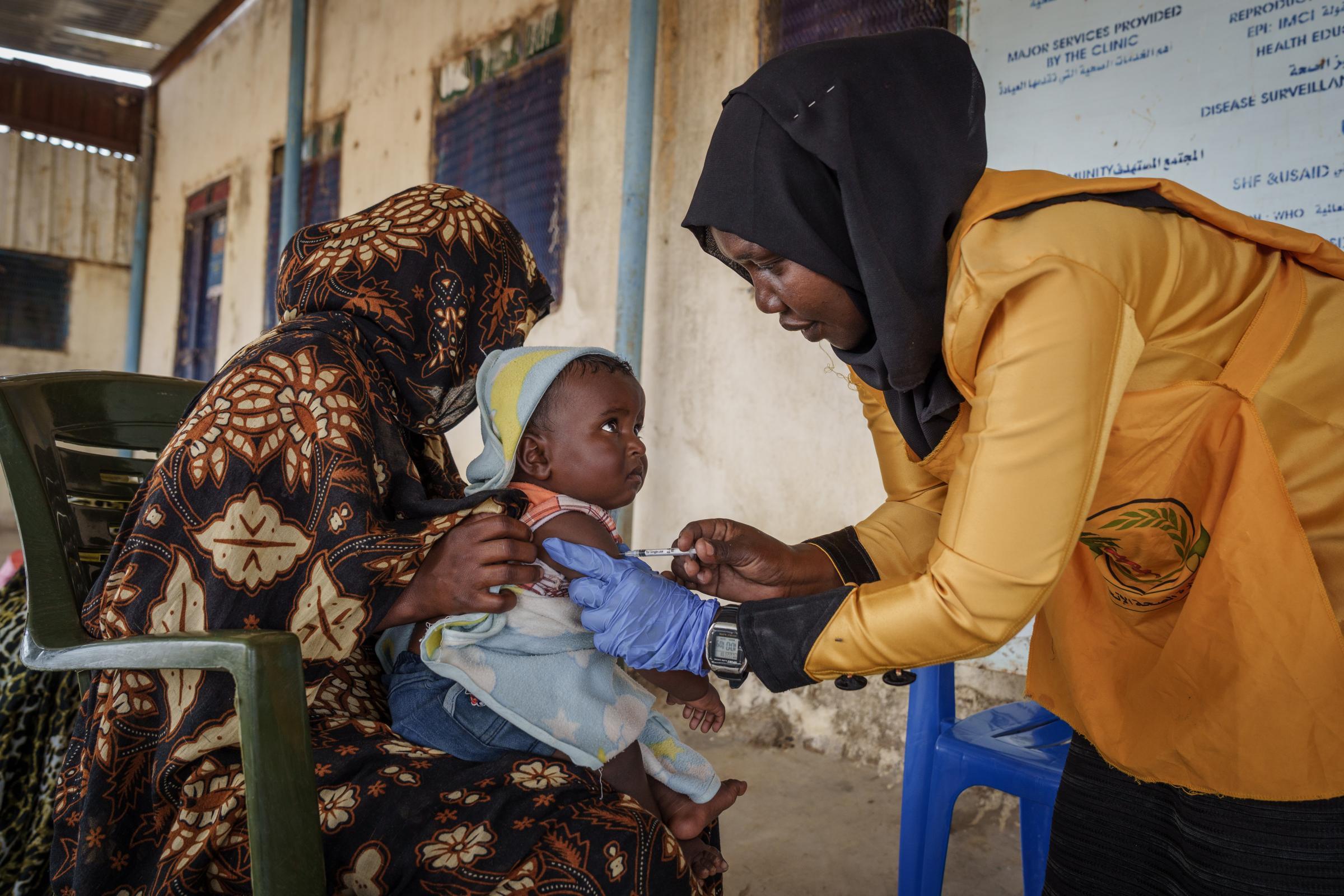
During a period of just over two years during the ongoing war in Sudan, teams from Médecins Sans Frontières (MSF) across Darfur treated close to 30,000 patients with vaccine-preventable diseases, according to a new MSF report.
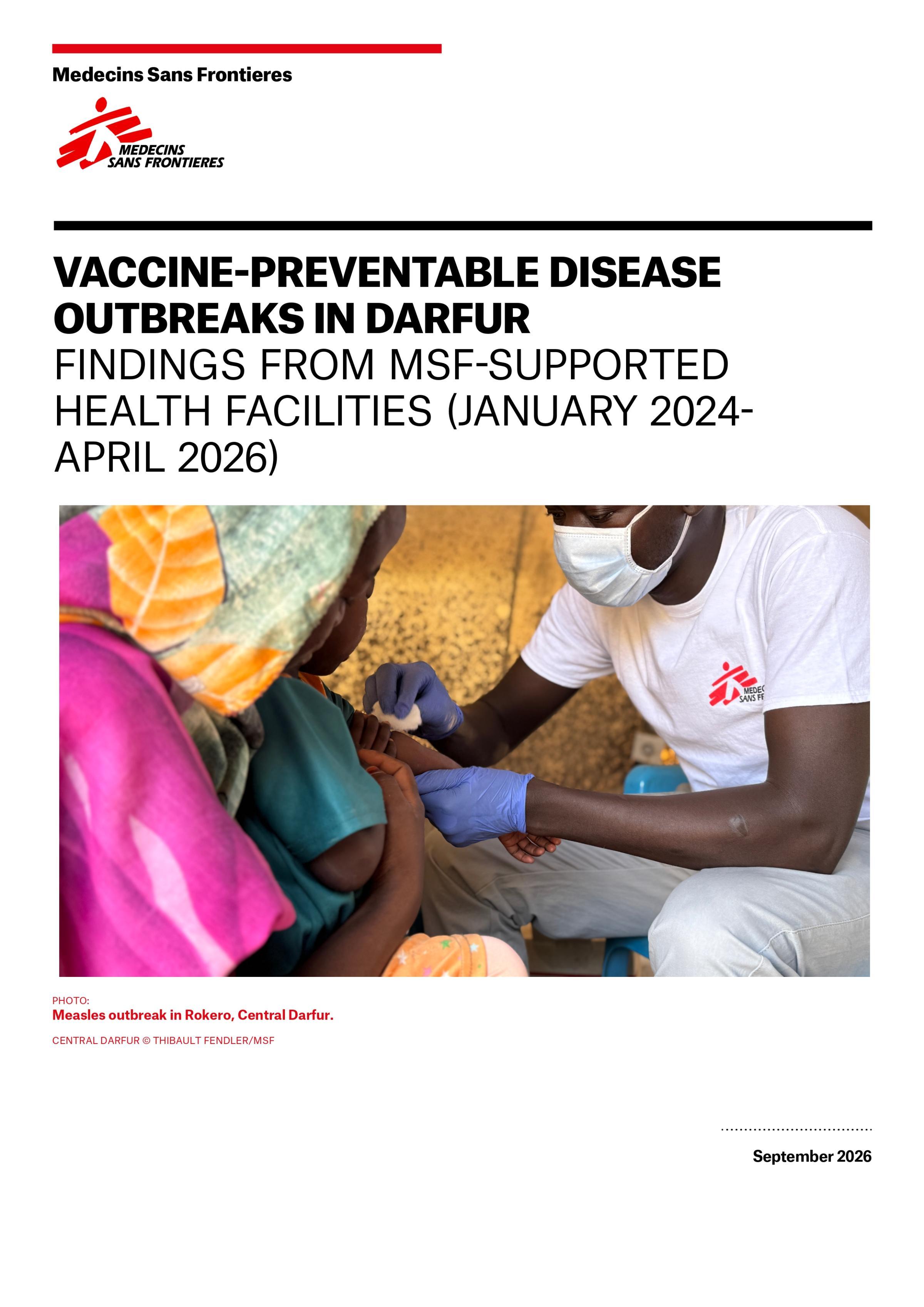
This report examines MSF’s operational experience responding to vaccine-preventable disease outbreaks in West, Central, North and South Darfur between January 2024 and April 2026. It draws on epidemiological data from MSF-supported facilities, outbreak investigations, field observations, discussions with Ministry of Health officials and interviews with patients and caregivers. The findings are not intended to represent the overall epidemiological situation in Sudan.
The analysis highlights a persistent and widening immunisation gap in Darfur. Between January 2024 and April 2026, MSF-supported facilities reported 28,481 measles cases and 1,913 pertussis cases, as well as suspected outbreaks of other vaccine-preventable diseases. Approximately two-thirds of reported measles cases were children under five, and outbreaks repeatedly occurred in the same localities, including Tawila, El Geneina, Rokero, Zalingei and Nyala. Measles transmission intensified substantially during 2025 and the first four months of 2026; in South Darfur alone, more than 10,600 suspected cases had been reported by the end of April 2026.
Measles was the most common disease treated and mostly among unvaccinated children. MSF urges the Sudanese health and political authorities to lift barriers and administrative blockages currently preventing vaccines from entering Darfur. We also urge donor countries and the UN to increase funding and provide the vaccines to health authorities. Without immediate action to restore immunization activities in the country, outbreaks will continue to spiral, and people will keep dying from diseases we have the tools to prevent.
Between January 2024 and April 2026, MSF-supported facilities in four states of Darfur, a vast region in western Sudan, recorded more than 28,000 measles cases and nearly 2,000 pertussis cases: 75 per cent of the patients treated for measles were not vaccinated, and 69 per cent were children under five years old.
Several localities including Tawila, El Geneina, Rokero, Zalingei, Nyala, and East Jebel Marra saw recurrent transmission over consecutive years, suggesting outbreaks were not fully contained and that immunity gaps persisted despite repeated outbreak response activities, says Sebastián Traficante, MSF emergency coordinator in Darfur. Our teams are constantly treating children for diseases that could have been prevented with a vaccine. Many children reach our facilities in critical condition, and they simply don't make it out of the hospital."
Wartime collapse of health system, supply and staffing issues
According to the MSF report, the transmission was particularly high in South Darfur, where 10,600 suspected measles cases were reported in the first four months of 2026 alone, exceeding the total number of cases in 2025.
Vaccine-preventable diseases are especially dangerous when paired with complications of other medical conditions, such as malaria and malnutrition, which are rampant across Darfur.
With the war in its fourth year, Sudan faces one of the world's worst humanitarian crises: in 2026, 34 million people need humanitarian aid and 21 million cannot get basic or even life-saving medical care due to the collapse of the Sudanese health system. According to the World Health Organization, 37 per cent of health facilities across the country are non-functional. Those still open in Darfur report severe shortages of staff, medicines, vaccines, equipment and supplies, and many have only partially functioning or non-functioning cold chains to keep vaccines viable.
Routine vaccination services struggle to reach people, especially in remote areas. The supply, transport and storage of vaccines face significant barriers, mostly due to administrative delays, such as in obtaining import approvals and travel permits,” says Dr. Saiful Islam, MSF emergency medical coordinator for South Darfur. “State-level vaccination offices are often not functioning, leaving little monitoring or supervision. Many health facilities have no permanent vaccination staff and rely on volunteers.”
Both availability and access are major concerns for communities. In South Darfur, where the burden of vaccine-preventable diseases is highest, only a fraction of facilities has fully functional cold-chain capacities. In Central Darfur, which experienced recent measles and pertussis outbreaks, MSF teams reported delays in vaccine arrival, administrative approvals and vaccine mobilization significantly slowed outbreak response activities.
When services do not reach communities, families have to travel to find them. But the war has destroyed livelihoods and sent prices skyrocketing, leaving little income for families. For many parents, even the cost of transport to the nearest health facility is out of reach.
My child had never been vaccinated because we live in a farmland area, about three hours away from Sortony town, says Fauzia, the mother of three-year-old Faiz. The rainy season also makes it complicated to move around. Many children in my area are affected by vaccine preventable diseases.”
Faiz was admitted to Rokero hospital, in Central Darfur, for suspected whooping cough. After being examined, the MSF medical team confirmed that he was also affected by meningitis and tetanus. After 16 days in the isolation ward, Faiz passed away.
Emergency vaccination campaigns not enough
Disease surveillance is also a major gap. With limited monitoring and follow-up, outbreaks often go undetected until the disease has spread widely, and emergency vaccination campaigns begin too late.
Some emergency campaigns have taken place in various parts of Darfur since 2024 and can help contain outbreaks. But these campaigns need to be more efficient, ideally including antigens for several diseases, and they cannot replace routine immunization. For instance, in Tawila, North Darfur, a severe measles outbreak saw more than 1,900 cases treated at Tawila Hospital between January and April 2026. Following an emergency mass vaccination campaign reaching 130,000 children across Tawila town and internally displaced camps, community transmission was brought to a halt, with cases dropping to just 96 between April and September 2026, a 95 per cent reduction.
While these targeted emergency campaigns save lives in real time and we have seen cases drop afterwards, without sustained investment in routine vaccination, cold-chain infrastructure, vaccination staff and disease surveillance, outbreaks of measles, pertussis and other preventable diseases will keep returning across Darfur.
Immunization in Darfur and the rest of Sudan must be adapted to the reality of the conflict, says Traficante, MSF emergency coordinator. That means mobile, outreach and catch-up services run by professional vaccination teams. They can reach unvaccinated children where they are, and also act as our eyes in communities, tracking immunization rates and detecting outbreaks early."
MSF calls on health authorities, donors and UN agencies to fund and facilitate mobile and catch-up vaccination across Darfur and the rest of Sudan. MSF also urges all warring parties and authorities in Sudan to immediately remove administrative barriers to the import and transport of vaccines.
*The full report ‘Vaccine-preventable disease outbreaks in Darfur’ can be read here: https://medias.msf.lu/en/report-vaccine-preventable-disease-outbreaks-in-darfur