Ebola
Ebola Disease Outbreak in DRC and Uganda – 2026
On May 15, 2026, the Ministry of Health of the Democratic Republic of Congo officially declared an Ebola disease outbreak in the northeast of the country, where Médecins Sans Frontières (MSF) teams were working. On the same day, Uganda also declared the presence of the disease within its borders. This outbreak is caused by the rarer Bundibugyo virus, for which no vaccine or treatment has yet been approved.
As at 24 August 2026, according to the official figures from the DRC’s National Institute of Public Health (IRNB), there were more than 5,677 confirmed cases, more than 2,717 deaths and more than 1,245 survivors in the DRC. In Uganda, 20 confirmed cases have been reported, including 2 deaths. On 28 July, the Ugandan Ministry of Health declared the Ebola outbreak over, and the WHO has confirmed this on 27 August.
What you need to know about Ebola:
The Ebola virus was discovered in 1976. In March 2014, the largest Ebola outbreak ever recorded began. In just under two years, more than 28,000 cases of Ebola and approximately 11,000 deaths were recorded in the three West African countries of Guinea, Sierra Leone, and Liberia. Médecins Sans Frontières (MSF) established Ebola treatment centers there.
Our teams also provided psychological support, conducted health promotion activities, contributed to epidemiological surveillance, contact tracing, and the organization of safe and dignified burials.
As soon as an Ebola outbreak is reported, MSF stands ready to support the relevant Ministries of Health in their response efforts. Our teams do not just treat sick people: they also provide training to local and international staff, both in the field and in Europe, and actively participate in research projects.
Symptoms
Initially, there are no specific symptoms, making diagnosis difficult. The disease is often characterized by sudden onset of fever, weakness, muscle pain, headache, and sore throat. These symptoms are followed by vomiting, diarrhea, rash, kidney and liver failure, and in some cases, internal and external bleeding.
Treatment
After nearly half a century without a specific treatment, it was only during the largest Ebola outbreak in 2014, when wealthier countries were faced with the threat of Ebola within their borders, that funding for research and development of treatments and vaccines for the virus increased dramatically. Two treatments were approved by the U.S. Food and Drug Administration (FDA) in 2020. There are also two vaccines, which in addition to treatment, are essential to preventing and responding to an Ebola outbreak. While an important addition to the Ebola response toolbox, these new medical tools only address Zaire ebolavirus, the most common virus species that caused the 2014 outbreak.
Unfortunately, these treatments remain largely inaccessible to people who need them during outbreaks.
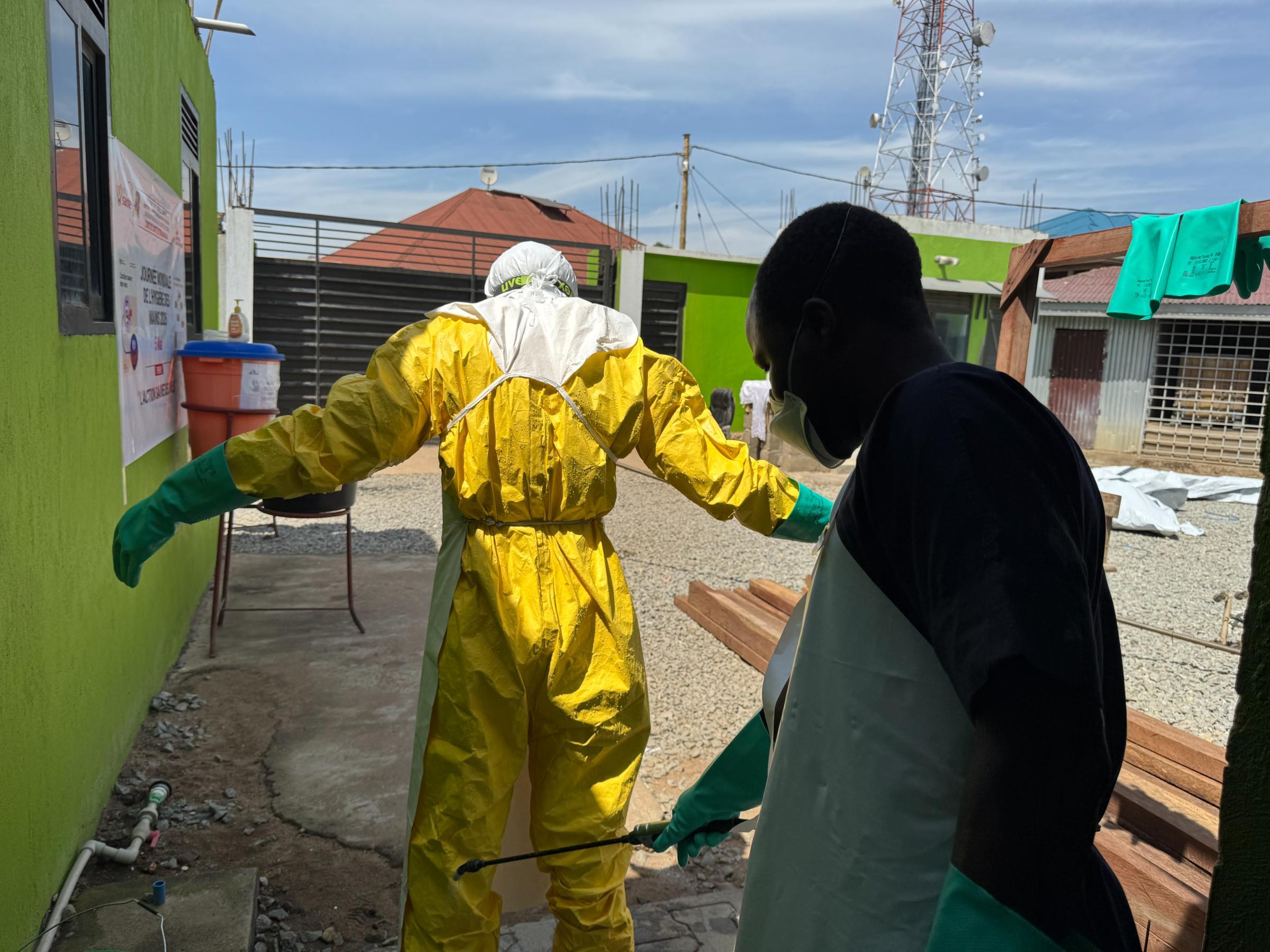
Prevention of transmission is crucial. That is why patients are treated in Ebola Treatment Centres that apply strict prophylaxis procedures. In addition, priority must be given to identifying people with whom the patient was in contact while sick and to carrying out safe burials. Health promotion activities are being organised in the communities to raise awareness of the threat, how to protect oneself and what to do if symptoms appear.