

A light in the darkness: powering care during Ukraine’s energy crisis
In 1 click, help us spread this information :
Ivan and Valentyna Zalutski, a retired couple from Oleshky, Kherson region, have been living for nearly three years in a modular centre set up for internally displaced people (IDP) in the Kyiv region. They were evacuated there in 2023 after Russian military forces destroyed the Kakhovka Hydroelectric Power Plant dam, causing widespread flooding across towns and villages. The couple survived by taking refuge on the roof of their house.
They lost everything and were later evacuated to the Kyiv region. During the winter of 2026, Medecins Sans Frontieres/Doctors Without Borders (MSF) supported the centre with hygiene kits to help residents manage washing and cleaning during prolonged blackouts, when even basic daily activities — preparing food, heating rooms, or taking a shower — became a challenge.
Like millions of people across Ukraine, the Zalutskis endured one of the harshest winters ever experienced in the country, with temperatures dropping to -20°C and frequent disruptions to electricity and heating.
Spring 2026 has brought short-term relief to people in Ukraine, however, the level of destruction of Ukraine’s energy infrastructure by Russian forces remains critical. People continue to face the consequences of electricity shortages, which are expected to worsen during the summer months, when increased use of refrigerators and air conditioning will place additional strain on the power grid.
As of early 2026, most of Ukraine’s large thermal or hydroelectric power plants have been damaged. Nuclear power plants have also reduced their generation capacity following attacks. According to The International Energy Agency, Ukraine is unable to produce more than half of the electricity it requires. The country has increasingly relied on generators and electricity imports from EU countries to meet demand.
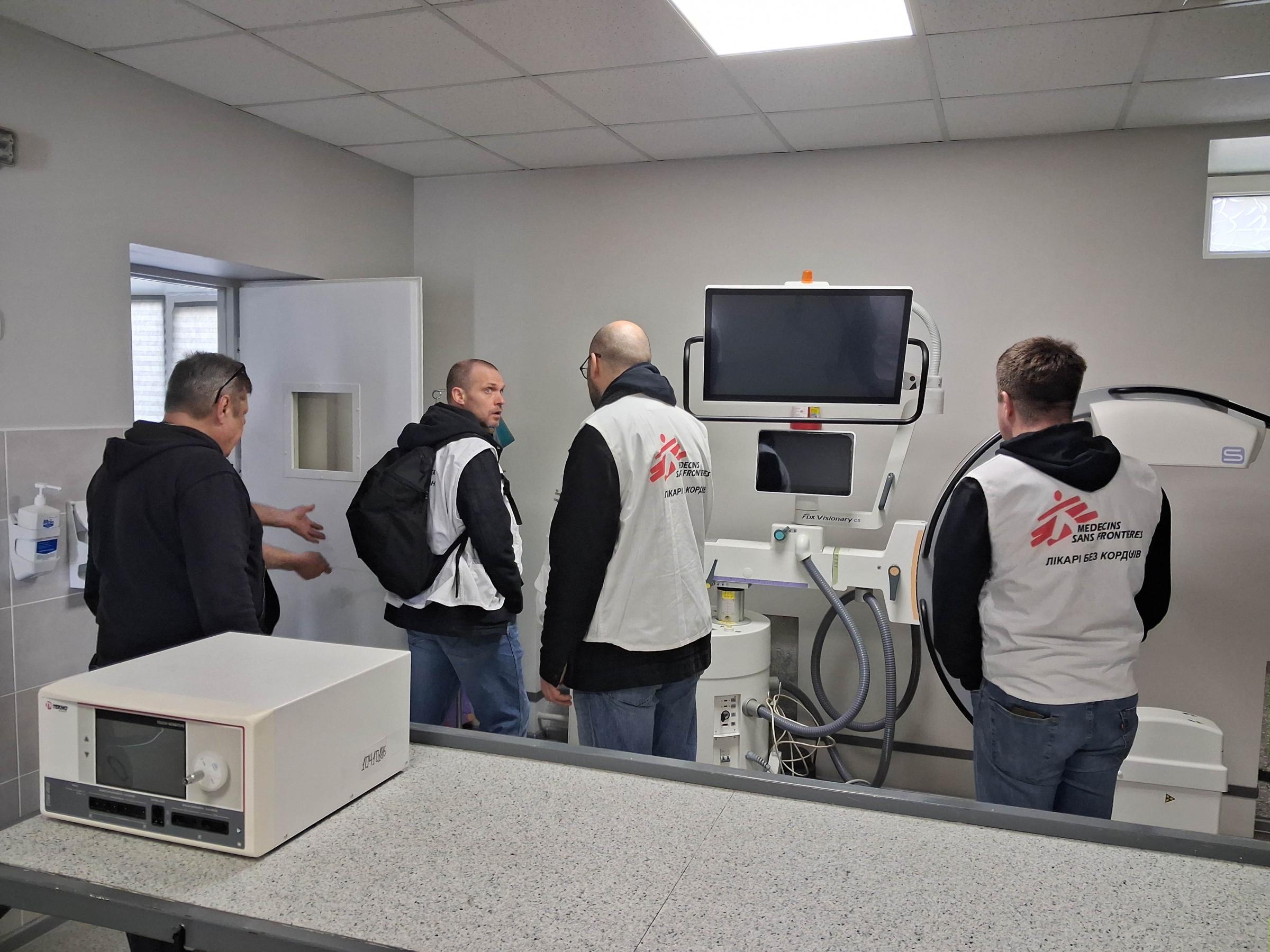
MSF teams continue to respond to the energy crisis in Ukraine by supporting medical and social care facilities with charging stations and inverter systems designed to help ensure uninterrupted power supplies during prolonged outages.
Kyiv City Clinical Hospital No. 10, which provides care for more than 300 patients receiving inpatient treatment and thousands of people attending outpatient consultations, asked for MSF's support to secure uninterrupted power supplies for its operating theatres and intensive care units.
“This medical facility was equipped with powerful inverter and battery systems — capable of autonomously supplying electricity to parts of the hospital for extended periods, even during blackouts,” says Yann Minois, MSF project coordinator. “MSF also assessed the condition of the electrical networks. Much of the infrastructure was old and in poor condition, so it was replaced with modern equipment in the areas where the inverter and batteries were installed and connected. People’s lives depended on this.”
Between January and April 2026, MSF projects supported 12 medical and social care facilities with autonomous power supply systems in the Kyiv and Vinnytsia regions. In response to requests from MSF-supported hospitals near the front line in the Dnipropetrovsk and Kherson regions, donations were also provided during the winter of 2026 to help the facilities cope with the cold weather. These included generators, portable space heaters, voltage stabilisers, and modern electrical distribution panels.
One of the main problems in Ukraine is the unstable electricity supply, which creates significant difficulties for medical and social care facilities,” explains Artem Kovtun, MSF logistics supervisor.
“Staff in many hospitals and care facilities tell us that although they have generators provided by the authorities, fuel supplies are very limited. As a result, generators are only used in the most critical situations. Our donations include batteries and inverters, which help power facilities when generators cannot be used, including during emergency or planned prolonged power cuts.” Most medical and social care facilities in Ukraine are housed in Soviet-era buildings, often characterised by long, poorly lit corridors where lighting remains insufficient even under normal conditions. During blackouts, transporting patients in critical condition to operating theatres, or enabling people with disabilities to move safely from their rooms to the toilet, can become extremely difficult.
“We run a 24-hour residential care home,” says Antonina Rohozovets, director of the MSF partner care facility that received the donation. “We currently have 173 residents, many of whom are elderly. It is vital for us that the corridors remain lit and that all equipment continues to function, even during prolonged power cuts. We needed charging stations like those donated by MSF so residents can move safely through the corridors to the medical room or the toilet during the evening or at night. For these people, this means freedom of movement.”
MSF calls for an end to the systematic attacks on Ukraine’s energy infrastructure that are depriving millions of people of electricity, clean water, and basic services. An uninterrupted power supply is a basic and lifesaving necessity for the functioning of medical and social care facilities, where some of the country’s most vulnerable people live.