
DRC: MSF International President delivers urgent warning to the UN Security Council
In 1 click, help us spread this information :
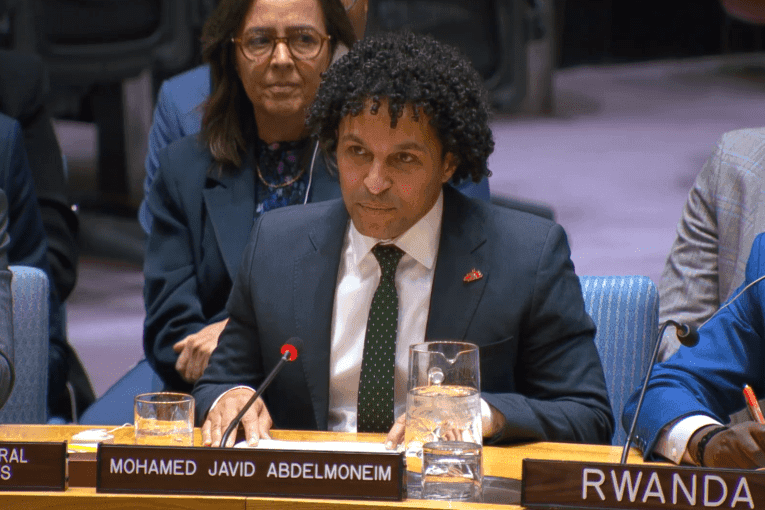
Dr. Javid Abdelmoneim, international president of Doctors Without Borders (MSF), addressed the United Nations Security Council on Friday, December 12, calling for recognition of the growing gap between the political progress displayed and the reality experienced by the populations of eastern Democratic Republic of Congo (DRC).
For months, MSF teams have been witnessing an intensification of violence, displacement, and deprivation in the Kivus and Ituri. Patients describe bombed villages, extremely brutal attacks, and families forced to flee repeatedly.
Despite the appearance of political momentum in recent months, and despite the signing of peace agreements, the crisis is not abating, Dr. Abdelmoneim reiterated.
Health systems are collapsing. Sexual violence is widespread. And humanitarian access and funding are shrinking as needs rise."
For MSF, the contrast between political signals and the daily lives of the millions of people affected is now glaring. The recent M23 offensive on Uvira – the very day after an agreement was signed in Washington – forced some 200,000 people to leave their homes, including 40,000 to Burundi.
“This offensive shows that the promise of peace masks a reality of persistent and large-scale violence,” said the international president of MSF.
In his speech, he stressed that the current crisis is part of decades of resource predation and structural neglect.
Generation after generation of Congolese have seen their lives and dignity sacrificed at the altars of politics and profit.
Until civilians are no longer treated as expendable, no political process will bring real relief."
Dr. Abdelmoneim also warned that political commitments will remain futile unless they translate into concrete measures on the ground. He called for the protection of civilians to be placed at the forefront of priorities, for humanitarian access to be guaranteed in accordance with international law, and for emergency response funding to be commensurate with the needs.
While speeches continue in this chamber, civilians remain invisible, unprotected, displaced, starving, deprived of care and dignity, he said.
Without genuine political will, the humanitarian response will continue to falter, stifled by insecurity, bureaucratic obstacles, and a worrying international disengagement."
The international president of MSF concluded by urging members of the Security Council to break with approaches that have failed so far.