
Ebola: “The response is not keeping pace with the speed at which the disease is spreading”
In 1 click, help us spread this information :
As the Director-General of the World Health Organisation, Dr Tedros Adhanom Ghebreyesus, visits Bunia in the Democratic Republic of the Congo, Médecins Sans Frontières (MSF) has warned that the current level of support is insufficient to tackle the Ebola outbreak.
Dr Alan Gonzalez, MSF’s Deputy Director of Operations, is particularly concerned about the lack of testing facilities and the numerous obstacles preventing a response commensurate with the needs.
Statement by Dr Alan Gonzalez, Deputy Director of Operations at MSF :
Two weeks after the declaration of the Ebola disease outbreak in Ituri Province, the situation is deeply alarming and a legitimate source of anxiety for communities and frontline health workers alike.
Never before has an Ebola outbreak recorded so many cases so soon after its declaration.
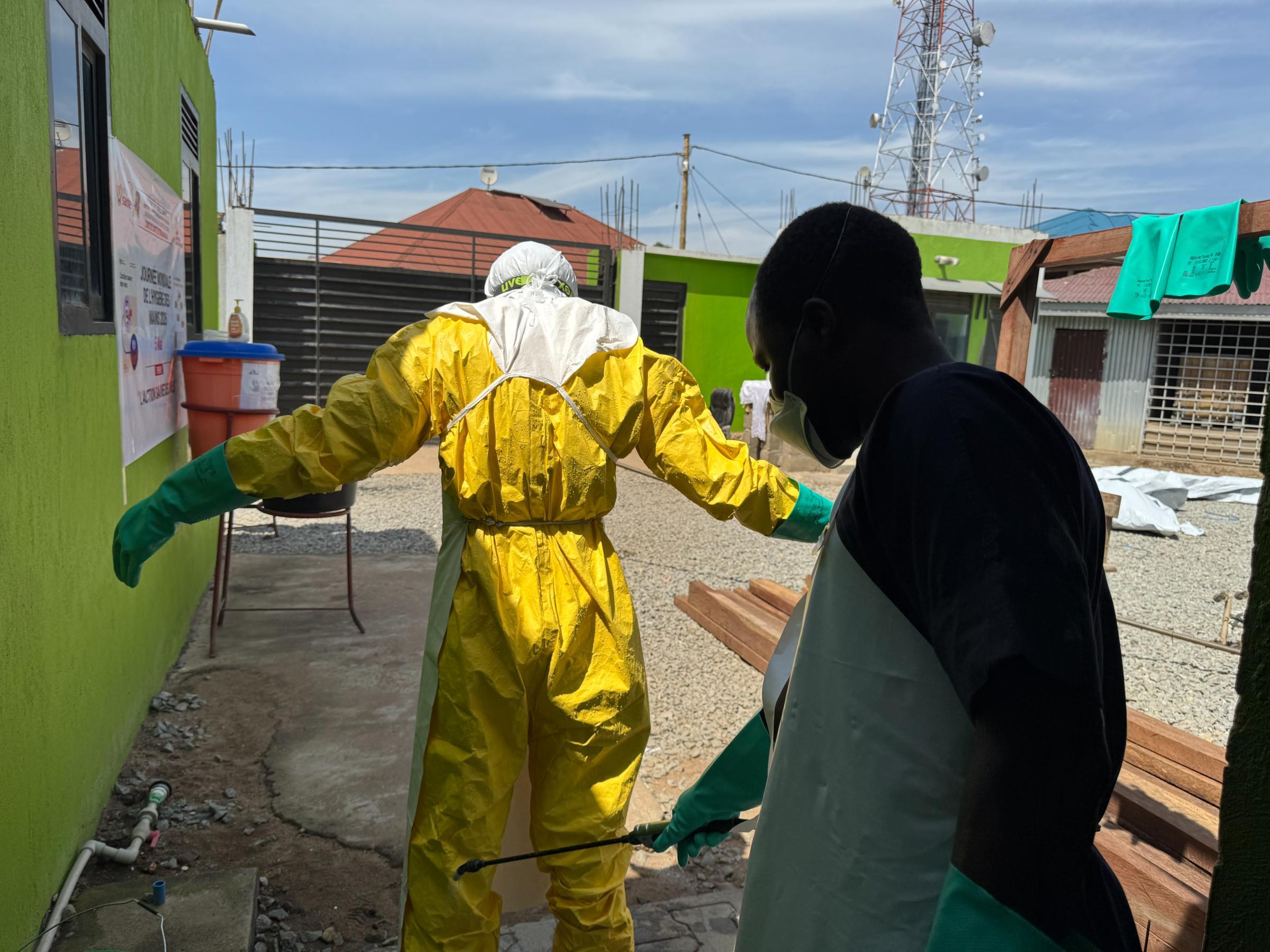
Like everyone in the affected areas, Médecins Sans Frontières (MSF) teams are witnessing a response that has not yet caught up to the rapid spread of the epidemic.
Unlike most previous Ebola disease outbreaks, this one involves the Bundibugyo virus, for which there are no approved vaccines or specific treatments, and which is particularly difficult to diagnose due to limited testing capacity.
The reality today is that nobody knows the true scale and severity of this outbreak.
New suspected cases are being reported daily, yet hundreds of samples remain untested.
At the same time, major constraints, including border and airport closures, continue to delay the arrival of critical medical supplies, humanitarian aid, and specialised personnel. We know from experience that these measures severely hinder outbreak response, and isolate countries that urgently need international support.
This outbreak is making those consequences painfully clear.
The number of expert medical organisations responding on the ground is still far too limited, and the level of support being provided - including our own - falls far short of what is needed.
People urgently need a response that matches the scale of the crisis they are facing.
To bring the situation under even partial control, there must be an immediate expansion of testing capacity.
This must be accompanied by a rapid, coordinated and tailored scale-up of the overall response, supported by experienced medical and humanitarian organizations, alongside guaranteed and sustained access for the swift entry of medical supplies and humanitarian staff into affected areas.
This outbreak is unfolding in a context where medical needs are already acute, and we are now at real risk of a silent escalation of other critical health problems people face every day. So many health facilities are overwhelmed, and access to regular, non-Ebola care is affected while many people remain at home, too afraid to seek care.
The response cannot succeed if it is imposed on communities rather than built with them. Every aspect of the response must be rooted in continuous engagement with communities — listening to concerns, addressing fear and misinformation, and building trust so that people feel safe seeking care.
Trust and active community participation are essential to controlling the spread of the disease and saving lives.
And the effectiveness of the response will ultimately depend on whether people believe in it.”