
In the Midst of War: How Sudanese Colleagues Continue to Save Lives
In 1 click, help us spread this information :
In 2026, Sudan marks three years of a war that has devastated cities, collapsed essential services, and forced millions of people to flee. Among them are our Médecins Sans Frontières (MSF) colleagues, who make daily efforts to sustain hope.
Each of our Sudanese colleagues has lost something because of the war. From the most evident losses—their loved ones, relatives, and friends, and everything they had built through a lifetime of work—to those that may seem simple at first glance — their routines, their sense of achievement, and their peace of mind.
Yet every single day they wake up and step outside their homes to reach MSF facilities and offices. They do so to help others whose lives have also been stripped of almost everything dear to them. Our Sudanese colleagues — 1,470 locally hired staff and 5,500 Ministry of Health staff supported by MSF1—are the pillars that sustain MSF’s work in the country.
Since April 2023, Sudan has endured a brutal conflict between the Sudanese Armed Forces (SAF) and the Rapid Support Forces (RSF). The fighting has forced more than 13 million people to flee their homes and has led to the collapse of essential services. An estimated 25 million people are now food insecure according to UN, and many are suffering from malnutrition. Civilians, including children, have been victims of attacks, ethnically motivated atrocities, kidnappings, torture, and sexual violence.
We asked our colleagues to tell us what the war has taken from them and what motivates them to continue working despite these losses. Their stories show that the conflict affects not only those seeking care but also those providing it.
Dr Altayeb, surgeon in Tawila
Dr Altayeb, an orthopaedic surgeon in North Darfur, fled El Fasher and arrived at Tawila hospital one week before the city was fully taken over by the RSF. He and his wife left behind the comfortable life they had built for themselves in a pleasant part of the city.
In the months leading up to their escape, that life had become unbearable. “There was a great danger because the shelling could start at any moment,” he says.
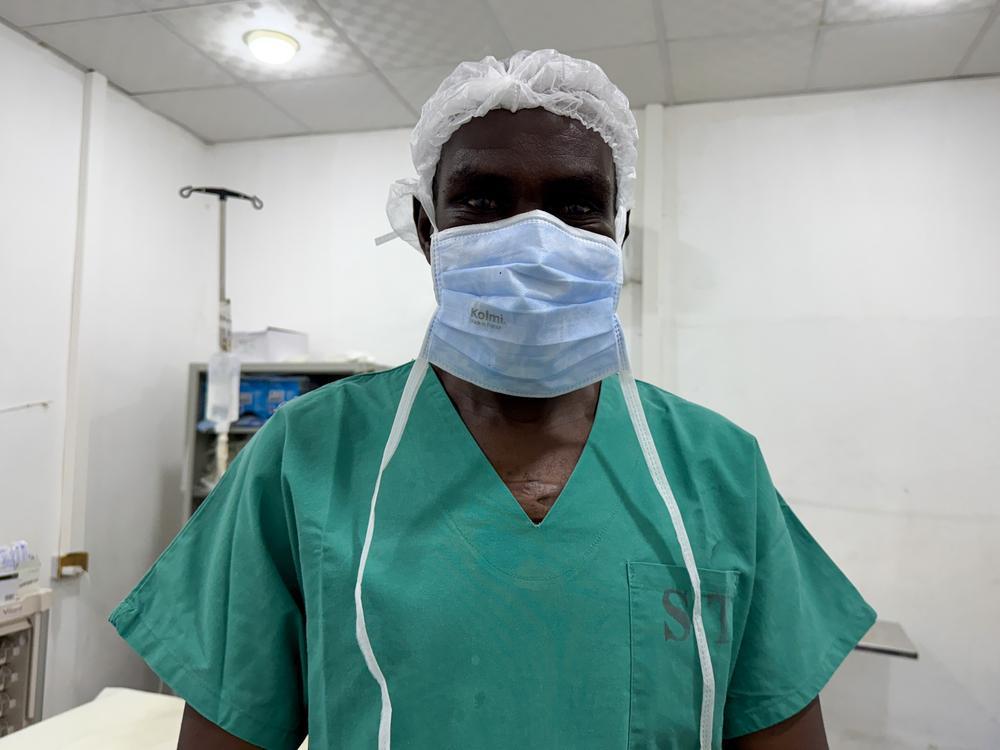
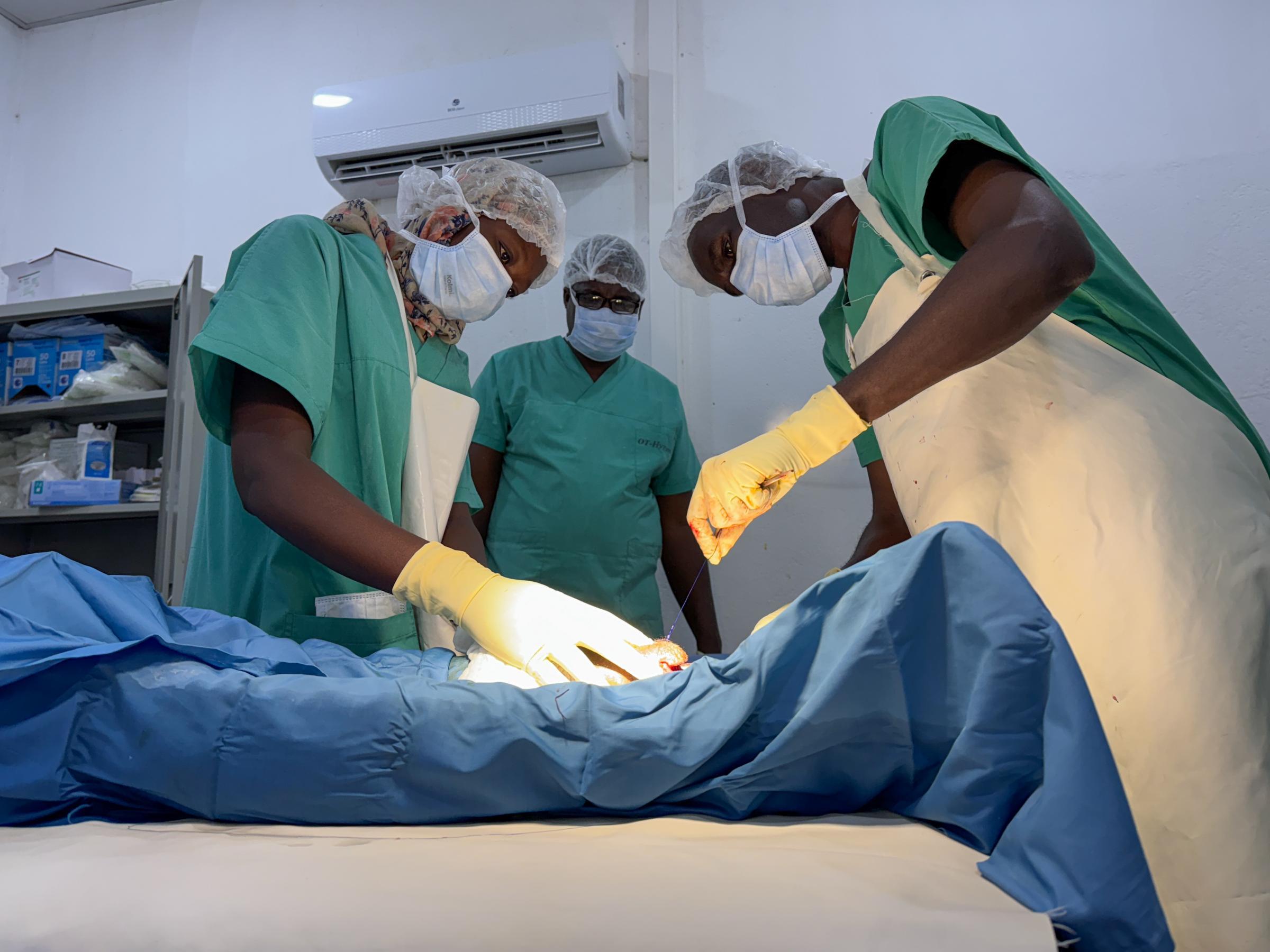
Two weeks after the takeover of El Fasher, his first task as a surgeon at MSF’s hospital in Tawila was to clean and suture the wound of a patient who had lost part of his leg during the capture of the city. By coincidence, this patient was Dr Altayeb’s distant cousin, who had to travel three days by donkey cart with an open wound from a stray bullet before reaching the hospital.
Dr Altayeb’s initial motivation for fleeing was to find a safe place for his pregnant wife to give birth. His motivation for continuing to provide care, however, comes from his patients. “Some of my patients from there are now here,” he says.
Sondos and Hagwa, maternity ward staff in West Darfur
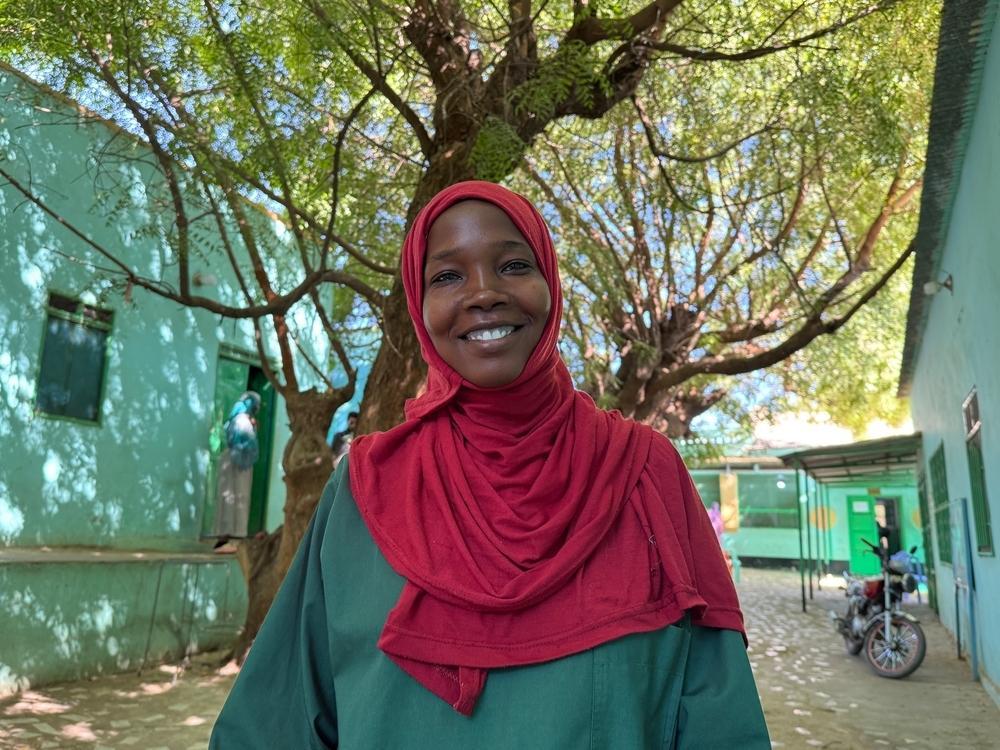
In El Geneina, West Darfur, the first thing the war took away from Sondos was the chance to graduate.
“When the war started, I was in my final year, but my university closed and never reopened,” she says. “The war took away my greatest achievement.”
Without a certificate, she cannot work as a nurse, so she works as a medical interpreter at El Geneina Teaching hospital.
The conflict also forced some of her family members to flee the city for three months. When they returned, she discovered that her brother, her aunt, and several other relatives had died.
“It became the most difficult year of my life,” she says. But with the strength she had left, she joined a group of volunteers who reopened the hospital's emergency room.
“We just wanted to help our community because they were suffering and had no facilities. We worked until MSF returned to the hospital, and then we could continue the work with them to provide the services”, she explains.
At the maternity ward, Sondos works with Hagwa, a Ministry of Health nurse incentivised by MSF. Hagwa says that one of the main losses caused by the conflict is the erosion of trust within the community.
Before the war, all Sudanese people were the same - kind, loving, and caring for each other. But now, because of the war, we see bad behaviour among us,” she says.
“Families have also been separated and scared. Our home is no longer safe,” she says.
Al Douri, epidemiologist in Khartoum
When the war erupted, Dr Al Douri was forcibly displaced from Khartoum, his home city. When he returned, he found his home in ruins and himself among the millions of Sudanese who had lost everything.
Now, at Bashair Teaching hospital, he sees “pain and despair” in every patient.
Working also in camps, he meets families who have travelled for days for safety.
“Many arrive in an advanced state of malnutrition and disease,” he says. He describes the ongoing crisis as a staggering blow to a 'peaceful and very welcoming' people.
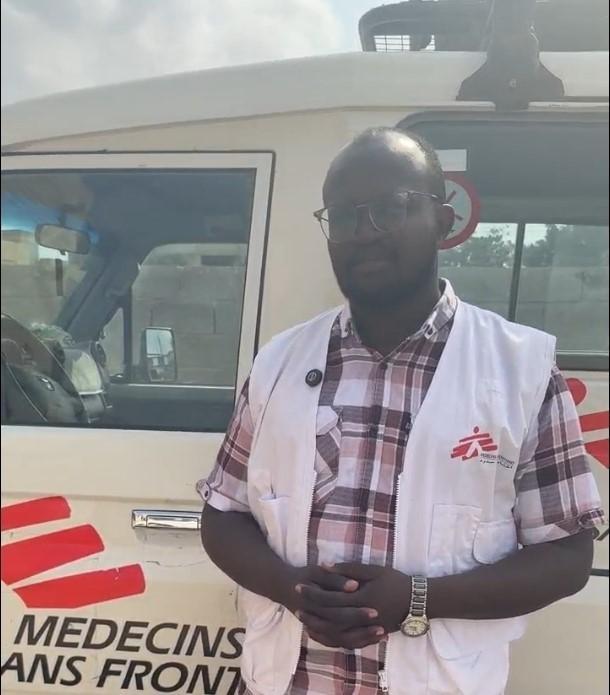
We found ourselves in a war that took everything from us,” he reflects.
Yet he refuses to surrender to bitterness. He carries a defiant message for his fellow Sudanese: “Do not lose hope. One day we will be united once again in this homeland.”
But for that to happen, he says the world cannot remain silent. “Don't stop talking about Sudan and the suffering of the Sudanese people.”Yet he refuses to surrender to bitterness. He carries a defiant message for his fellow Sudanese: “Do not lose hope. One day we will be united once again in this homeland.”
But for that to happen, he says the world cannot remain silent.
Don't stop talking about Sudan and the suffering of the Sudanese people.”
Hanan, community mental health worker in Tawila
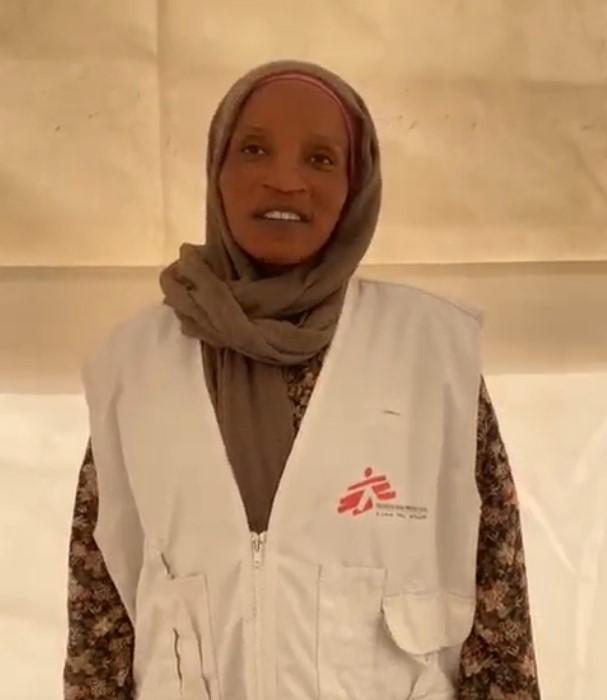
In Tawila, Hanan stands as a daily witness to a tragedy that defies words. Since the displacement began, she has seen horror marked on bodies and minds. She witnesses the trauma women experience, ‘whether physical or verbal’, and the deep trauma of sexual assault.
But in the heart of this chaos, another crisis haunts her: the children left behind.
“We often find children abandoned,” she explains.
These little ones are one of her greatest motivations.
Hanan will never forget a group of four children she met at the camp. Their mother had passed away, and their father went missing in the chaos of El Fasher. The eldest, only 12 years old, was desperately trying to feed his three younger siblings. All of them were already suffering from advanced malnutrition.
These children cannot survive without the help of NGOs,” says Hanan.
At the hospital supported by MSF in Tawila, they are finally receiving the care they need.
Zoubeida, midwife in North Darfur
For Zoubeida, the war in Sudan was a journey of survival. Originally from Zamzam, she was forced to flee when the peace she knew shattered.
“I would never have left El Fasher if I didn’t have to,” she says.
The long trek across Darfur was exhausting and painful. Upon arrival, she was a refugee in need, finding relief through NGOs that provided food and water.
But Zoubeida’s story did not end with her being a recipient of aid. Driven by her medical calling, she joined MSF as a midwife. Now, she helps pregnant women and newborns.
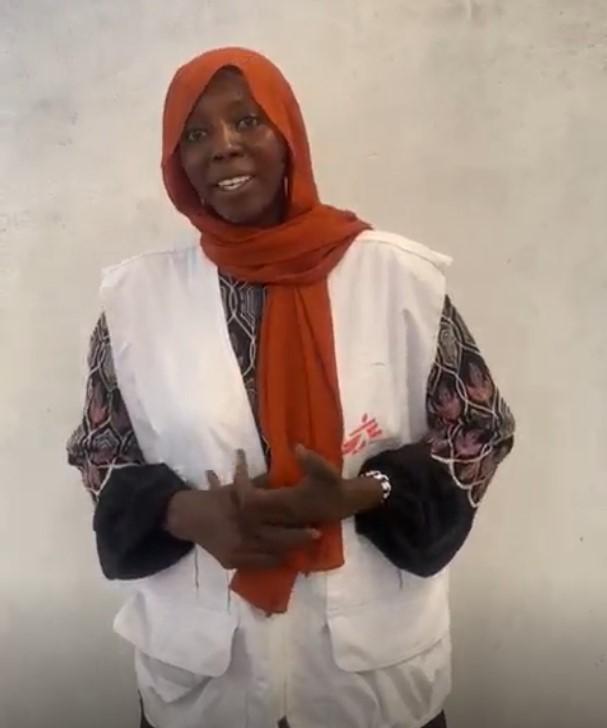
AIn the middle of a displacement camp, she brings new life into a world under fire. Her prayers are always with those lost to the war and for the ‘speedy recovery of the wounded’.
Thanks to the work of our Sudanese colleagues, in 2025, MSF carried out :

outpatient consultations

emergency consultations

surgical interventions
assisted deliveries

people treated for sexual violence

mental health consultations
Our teams currently work in eight states in Sudan, providing emergency medical care based solely on people’s needs.