Thailand


Myanmar/Thailand Earthquake: The Crucial Hours Begin
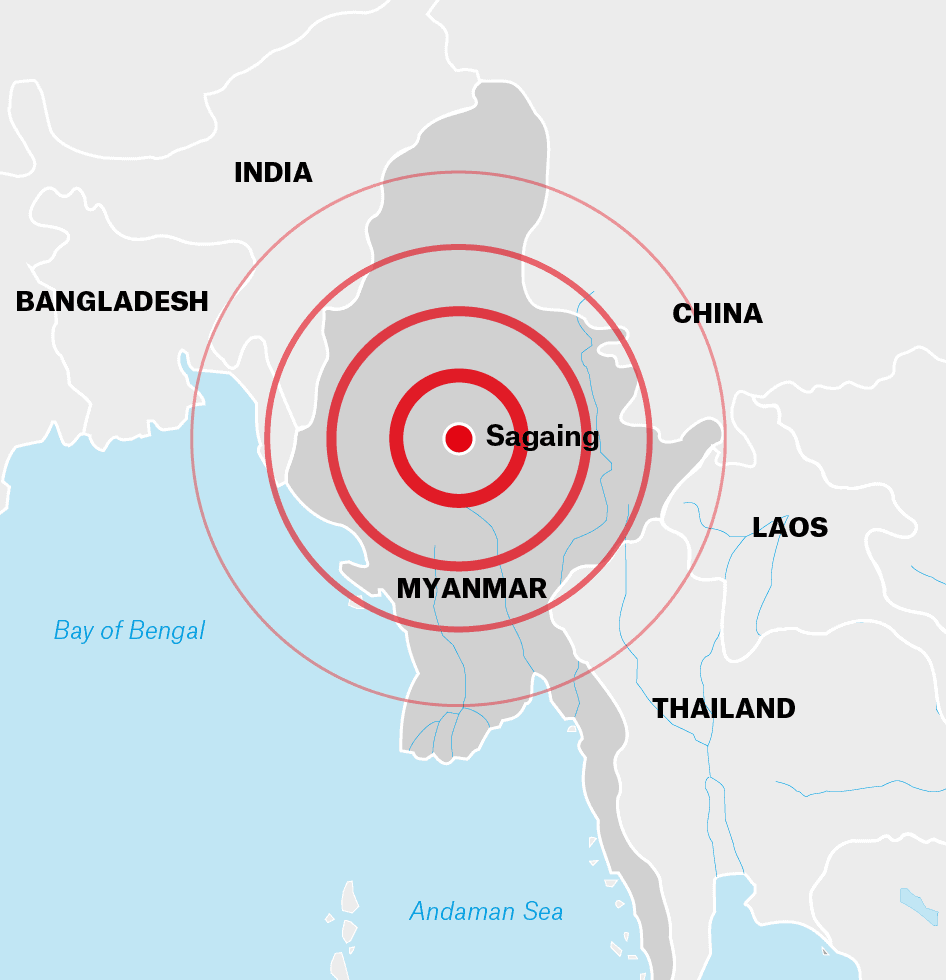
On March 28, 2025, a magnitude 7.7 earthquake struck central Myanmar, near Mandalay, and also reached Thailand.
MSF teams are about to travel to the disaster zone. We are deeply concerned about the fate of those affected. The Sagaing region was the hardest hit, an area where years of violence have left their mark. Six regions are currently under a state of emergency, and the government has issued a rare international appeal for aid.
We are doing everything in our power to deliver life-saving assistance as quickly as possible. Since our teams have been working in the country for 32 years, we expect to be on the ground very soon. These are the moments that matter for the countless people trapped under the rubble. Thanks to the support of our donors, life-saving aid is on its way.
The emergency fund allows MSF to respond quickly to immediate needs in emergency situations, such as the earthquake in Mayanmar.
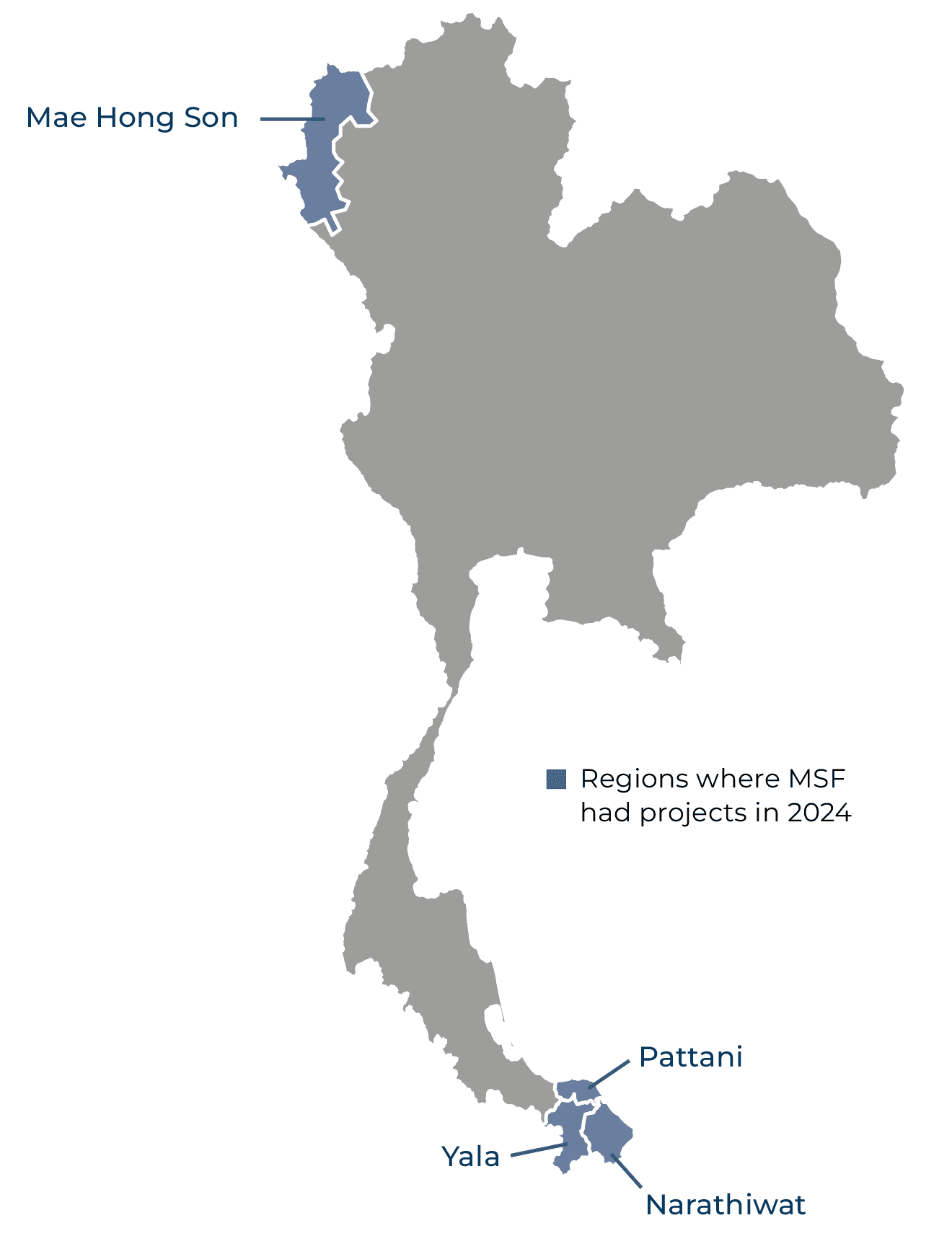
In 2024, Médecins Sans Frontières ran two projects in Thailand to address the healthcare needs of people affected by conflict.
Our activities in 2024 —

mental health consultations provided in group sessions

individual mental health consultations
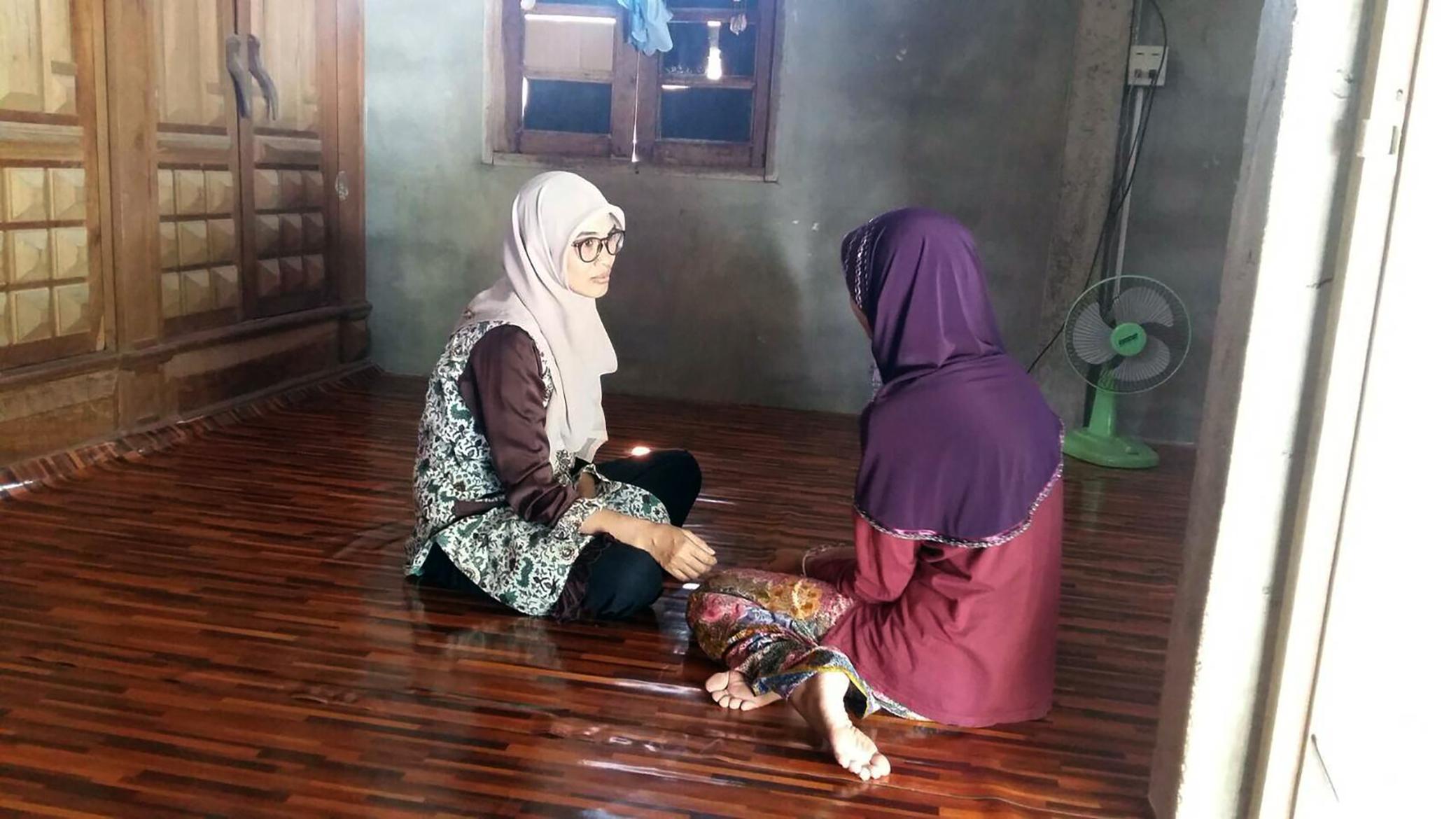
For seven years, our teams worked to improve the provision of basic medical services and mental health support in the country’s Deep South, a region that has been plagued by sporadic fighting for two decades.
We collaborated with local organisations in the provinces of Pattani, Yala, and Narathiwat, to increase access to healthcare, especially for survivors of ill-treatment who are hesitant to seek assistance, or who are excluded from existing services.
We ran a holistic programme, with a particular focus on mental health, which included individual and group therapy, psychosocial education, and stress management.
We also offered physiotherapy, pain management, and social support, and organised community-based activities to raise awareness of mental health issues.
Due to an overall decrease in the level and intensity of the violence in recent years, and our decision to hand some of our activities over to our partner organisations, we closed the project in June.
Meanwhile, in northern Thailand, we assisted patients from Kayah and Kayin states1 in eastern Myanmar with referrals for specialised healthcare in facilities in northern Thailand, as they are unable to obtain these services over the border, due to the ongoing conflict.