Tanzania

Médecins Sans Frontières ran a range of projects in Tanzania in 2024, providing healthcare to Burundian refugees and host communities, responding to disease outbreaks, and improving mother and child health services.
Our activities in 2024 —

outpatient consultations
births assisted

people treated for cholera
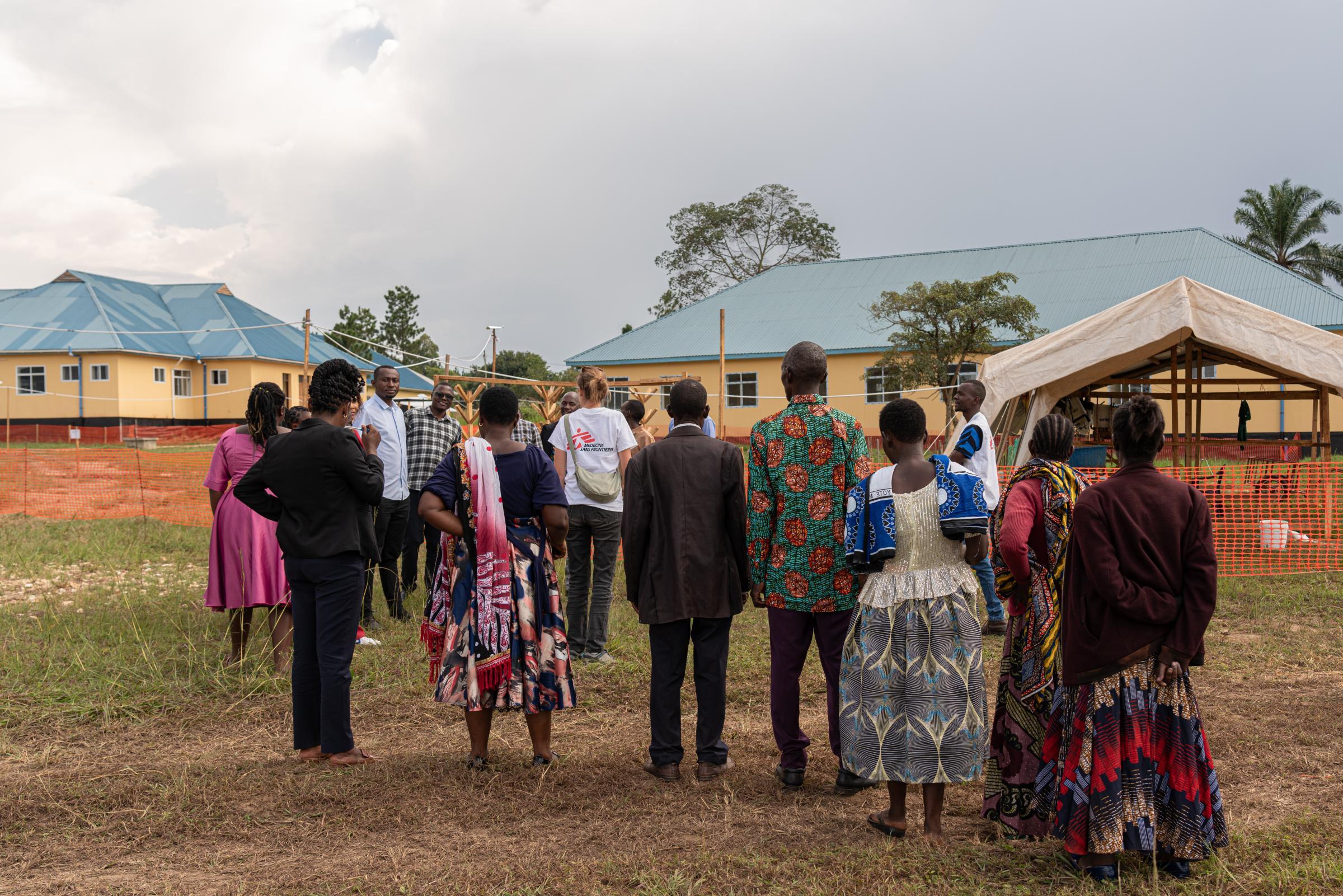
When violence broke out in Burundi in 2015, thousands of people fled over the border into Tanzania and sought refuge in Nduta camp.
Despite the authorities’ plans for the camp’s closure, we continued to deliver vital medical services to both the refugees and the local community in 2024, including malaria prevention activities, such as indoor residual spraying campaigns.
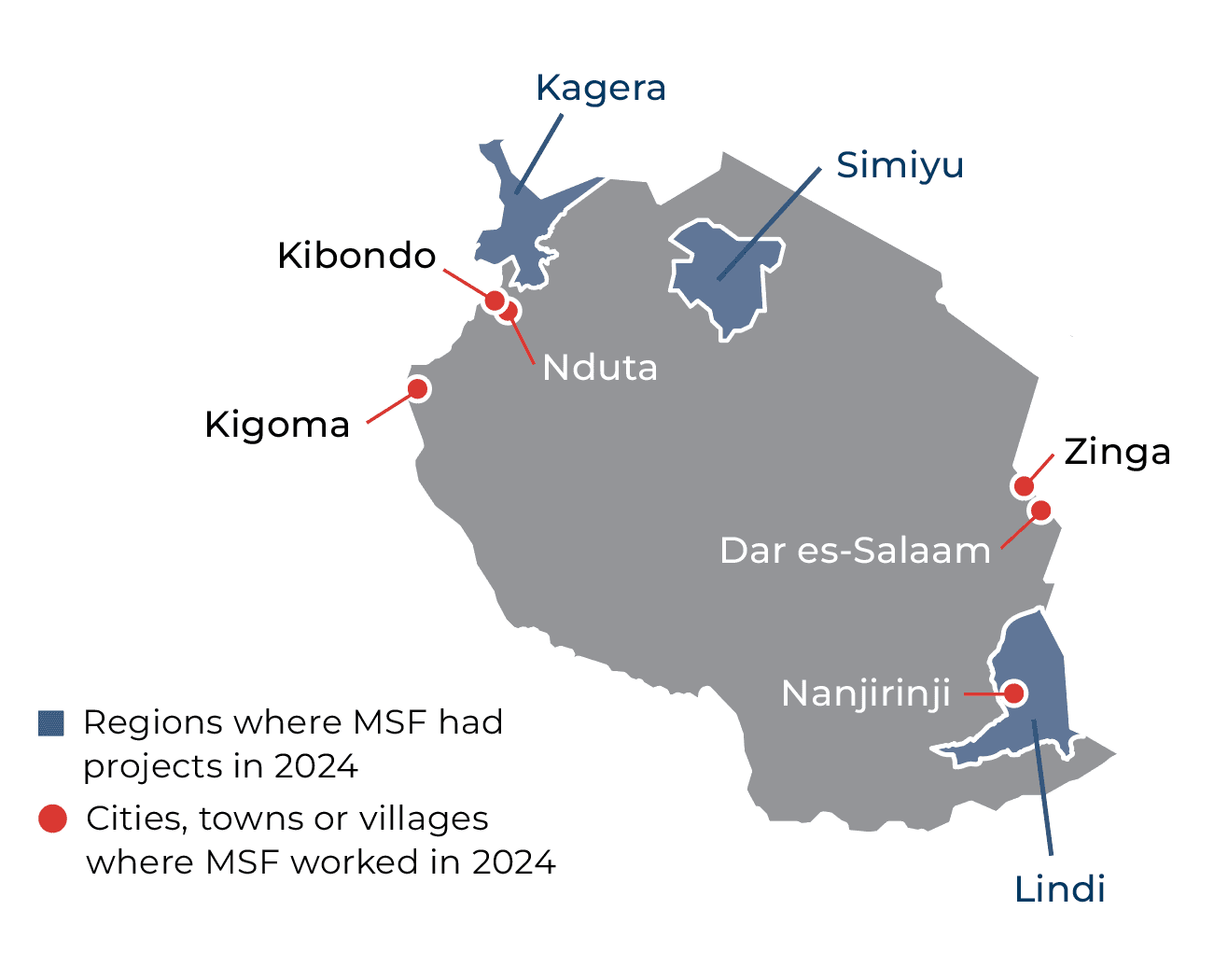
Elsewhere in the country, we supported the Ministry of Health’s responses to disease outbreaks, including three cholera responses launched in Lindi and Simiyu regions. In Kilwa district, our teams set up cholera treatment centres (CTCs), and supported the existing CTC in Itilima district. As well as improving the quality of care and the local capacity for early detection and surveillance, we referred suspected cholera cases to CTCs and oral rehydration points, strengthened community engagement and awareness, and helped with patient contact tracing.
During 2024, we also continued to run our project aimed at enhancing access to basic and specialised healthcare services, particularly for mothers and children, through seven public health facilities in Liwale, a southern region located near the border with Mozambique.
To improve the referral network, particularly for patients living in remote and underserved areas, we provided two additional ambulances.
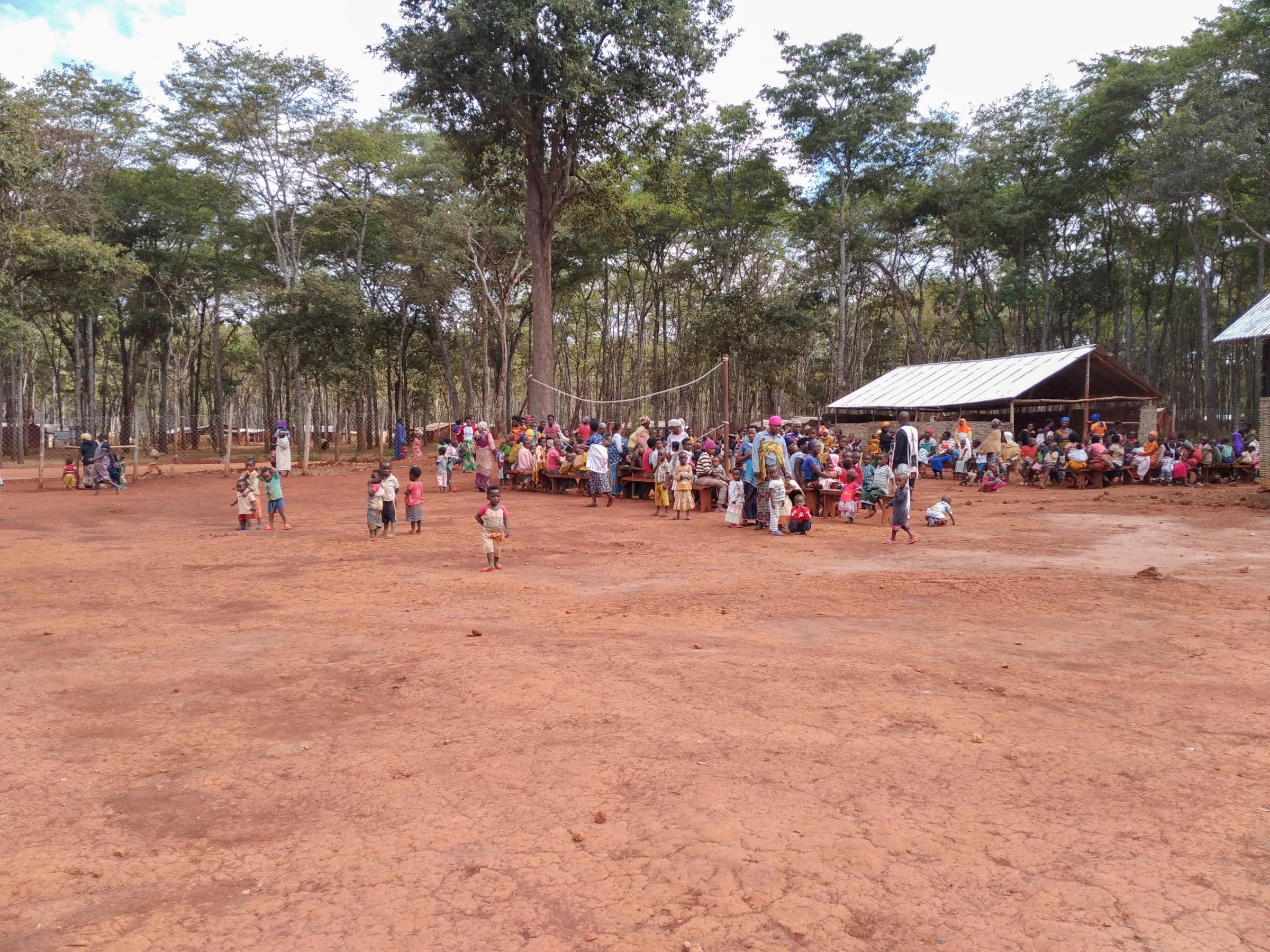
Focus : 10 years of MSF activities in Nduta (2015-2025)
For over a decade, MSF has delivered life-saving emergency and secondary healthcare to refugees and host communities, ensuring access to essential medical services where they’re needed most. Our teams have championed maternal and child health, supported safe deliveries and giving newborns the start every life deserves. We have provided mental health and psychosocial care, helping people and communities heal from trauma.
When deadly disease outbreaks struck we responded swiftly to contain infections and save lives. Those included:
Through continuous health promotion, we have supported communities with tools to protect and improve their own well-being. Our dedicated teams have delivered targeted assistance and nutritional support to restore health and dignity. We have safeguarded communities through widespread vaccination campaigns, protecting future generations.
Chronology
1990s to early 2000s
MSF provided extensive medical, nutritional, and water-sanitation support to hundreds of thousands of refugees fleeing conflicts in Burundi, Rwanda, and the Democratic Republic of Congo.
Burundi refugee crisis
After scaling down once camps closed, MSF returned in 2015 when a new wave of 400,000 Burundian refugees fled their country following a major political crisis. Tanzania thus opened Nduta Camp in Kibondo District to host thousands of Burundian refugees.
Nduta Camp
MSF began work in Nyarugusu Camp before moving to Nduta in 2015 providing emergency medical care, safe water, and disease prevention services for families on the move.
Between 2015 and 2025, MSF teams provided Nduta with:
safe deliveries assisted

mental health consultations

children vaccinated against measles

neonatology admissions

malaria patients treated

bednets distributed
households that benefited from residual spraying campaigns