
Somalia
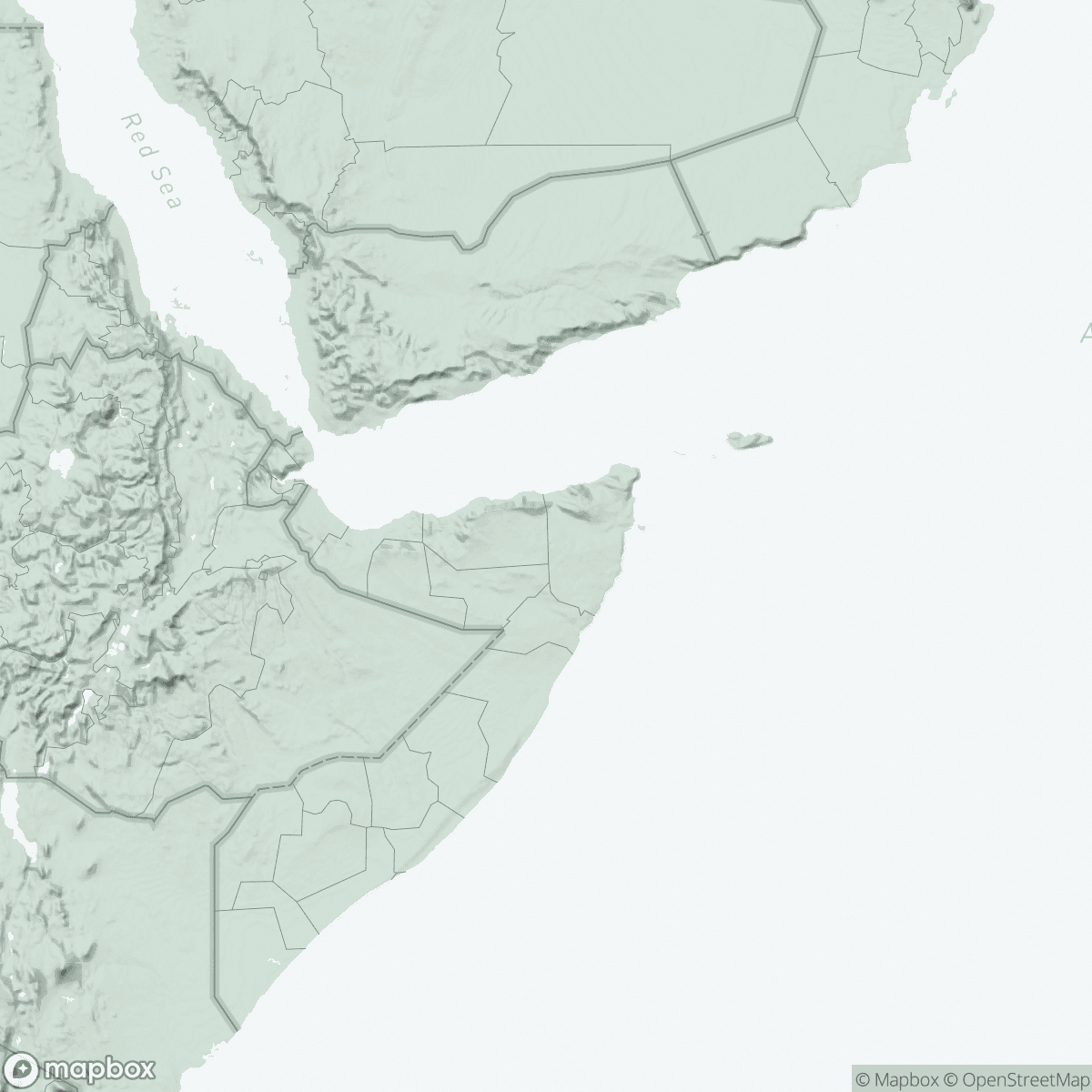
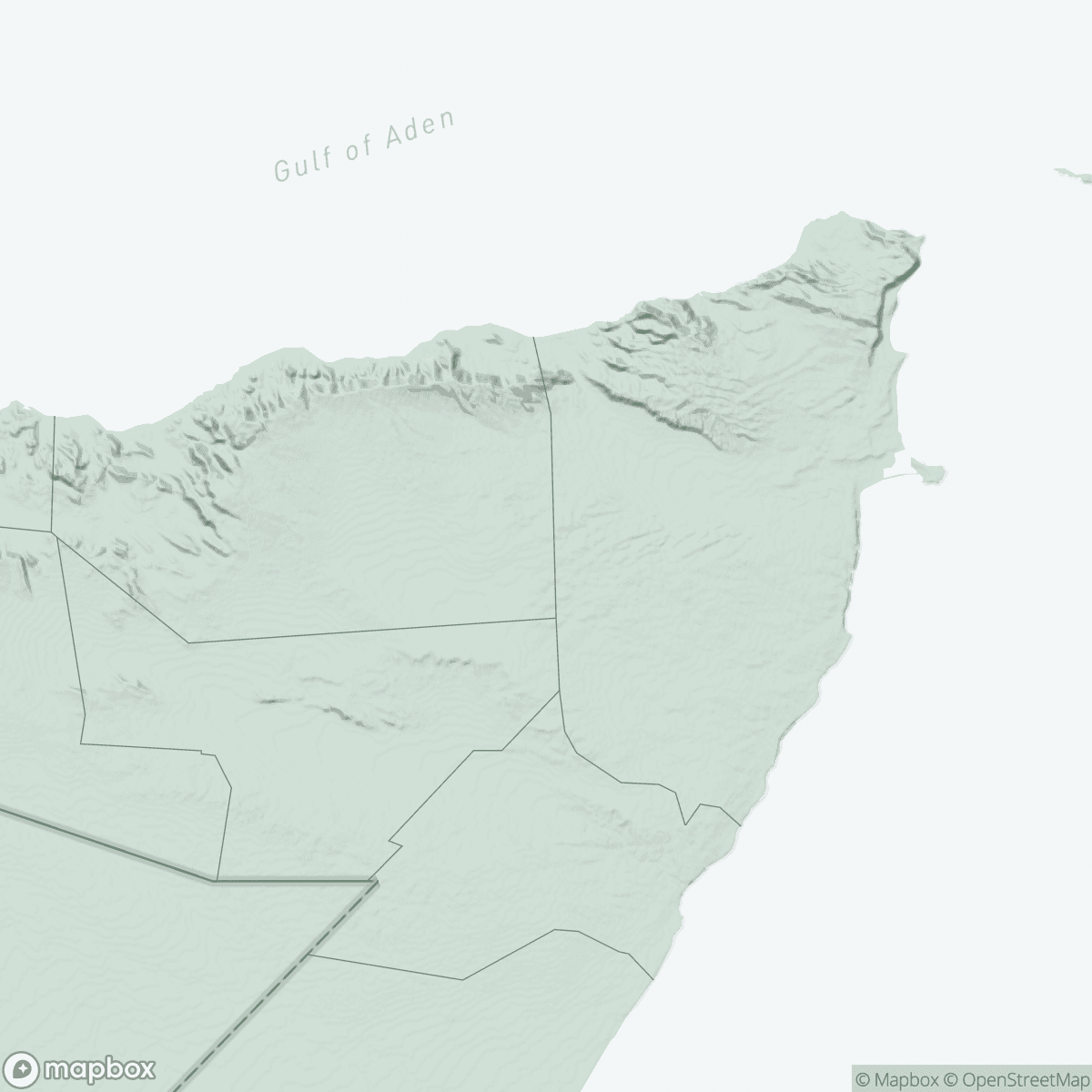

Somalia's humanitarian crisis is deepening, driven by drought, conflict, and collapsing services. The northern regions are facing severe drought conditions comparable to those in 2009 and 2017. The Federal Government declared a drought emergency in November 2025. An estimated 4.8 million people need humanitarian assistance. More than 200 health and 300 nutrition facilities have closed since early 2025. Food assistance has been slashed to a fraction of what is needed, and nutrition services are contracting amid a broader rationalization of humanitarian actors, with some areas experiencing overcrowding while others face gaps, as needs peak with 1.85 million children under five at risk of acute malnutrition.
Funding cuts are devastating Somalia's already fragile health system. The 2025 HNRP (Humanitarian Needs and Response Plan) was only 28.8% funded. Major health financing projects from the World Bank and FCDO (Foreign, Commonwealth & Development Office) are ending or being significantly reduced in 2026. MSF has observed a significant increase in patients seeking care at its supported facilities in Baidoa, as services collapse at the community level — mobile clinics, Outpatient Therapeutic Programme sites, and primary health centres are closing, pushing the burden onto the most vulnerable: women, children, and the elderly.
Somalia is battling concurrent outbreaks of measles, cholera, and diphtheria, a manifestation of chronic gaps in routine immunisation, collapsing health services, and inadequate WASH infrastructure. An estimated 1.5 million children under five have never received a single vaccine. These outbreaks affect both IDP settlements and host communities, where families face impossible choices, travelling more than 60 km to reach the nearest functional health facility, if they can afford the journey at all.
MSF calls for urgent and sustained investment in essential health services, nutrition coverage, and vaccination programmes in Somalia. The current patchwork of fragmented donor financing is failing. Donor healthcare financing should be harmonised, not further fragmented, as resources shrink. Emergency response capacity must be prioritised. Without urgent action to sustain nutrition services, secure health and nutrition supply pipelines, and strengthen routine immunisation, Somalia faces the risk of repeating the trajectory that led to the deaths of more than 40,000 people during the 2022–2023 drought, this time with far less humanitarian funding available.
MSF's Response
MSF has been providing medical and humanitarian care to the Somali people for over four decades, first arriving in Somalia in 1979. After a four-year gap due to security concerns, MSF resumed operations in 2017. Today, MSF operates in Baidoa (Southwest State), Galkayo North (Puntland State), Galkayo South (Galmudug State), and Guriel (Galmudug State), with a new project opening in Mogadishu in mid-2026, focusing on maternal and child health, emergency care, malnutrition treatment, and disease outbreak response.
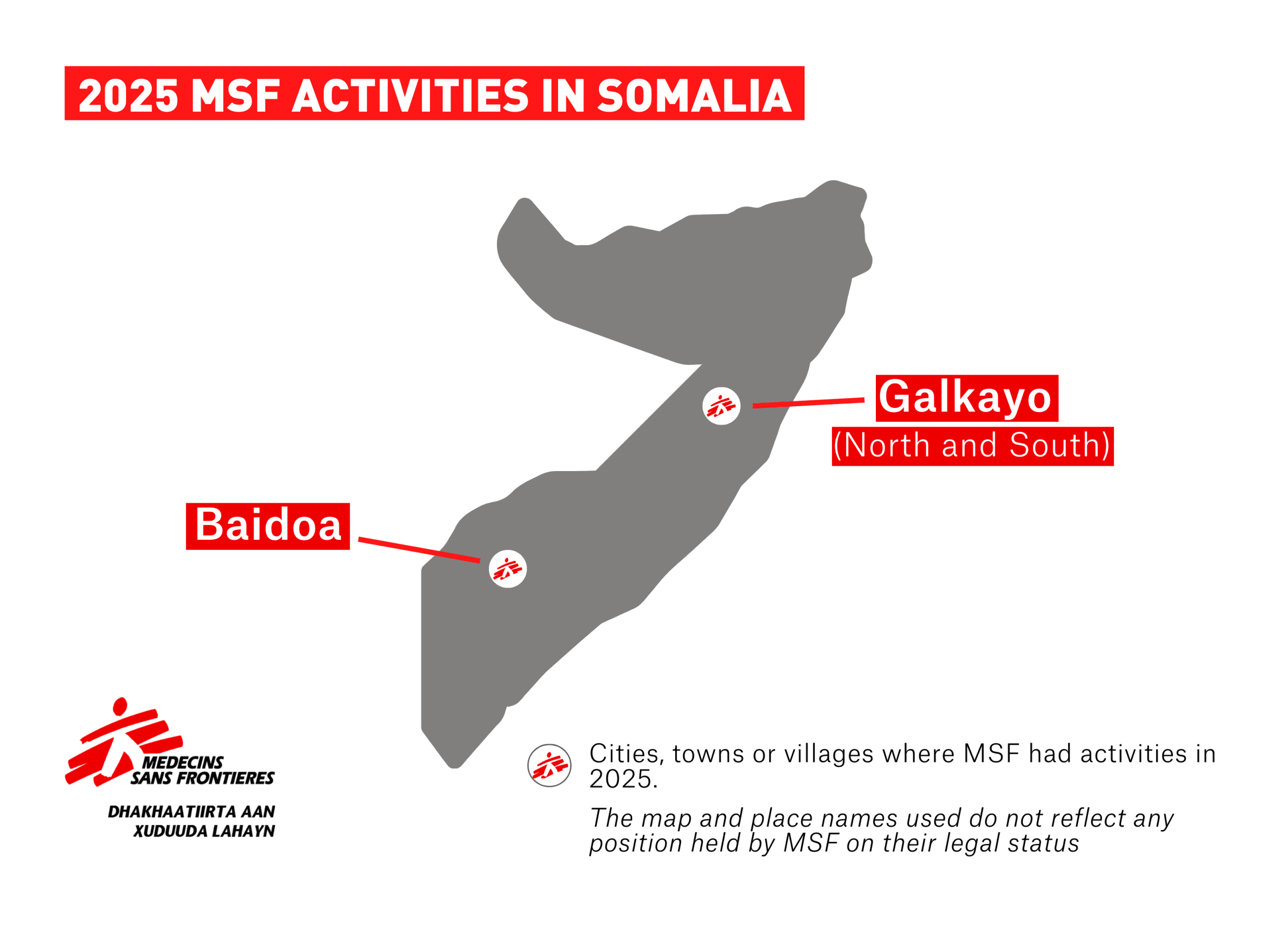
Our activities in 2025 —

emergency room admissions

individual mental health consultations

people treated for intentional physical violence

surgical interventions

pediatric consultations

malnutrition cases treated

Reproductive health consultations

Deliveries assisted

vaccinations provided
Emergency Response
In 2025, MSF teams in Somalia responded to repeated emergencies driven by drought, displacement, and the reduction of humanitarian services.
In Baidoa and Mudug, hospitals and mobile teams treated sharp increases in acute malnutrition and managed outbreaks of vaccine-preventable diseases, including measles, diphtheria, and acute watery diarrhoea. Between January and June 2025, MSF treated 20,239 cases of acute watery diarrhea/suspected cholera in Baidoa and Mudug.
MSF treated 1338 measles cases representing nearly 20% of all reported cases in the country. MSF had 2,769 ITFC admissions and 9,808 ATFC admissions between January and June 2025. The mission's emergency preparedness planning covers responses to disease outbreaks, displacement, war wounded, and nutrition crises.