
Three Months with a Medical Officer: Rebuilding Medical Strategy Through Listening, Data, and Dialogue
For three months, Wilma van den Boogaard moved between coordination meetings, health facilities, communities, and project discussions across Latin America and the Caribbean. Not to lead operations, but to do something equally important: help projects step back and think strategically again.
As an Operational Research (OR) Advisor on detachment in her role as a Medical Officer, her objective was not to implement immediate changes to projects. Instead, she focused on creating space for reflection in complex environments - where individuals are often fully absorbed in the demands of their work, making it particularly challenging to step back, gain perspective, and reflect on their actions and decisions.
Sometimes people think strategy means producing a big document. “But often it starts with simple conversations: What are we trying to achieve? What are we missing? And how do we know if what we’re doing is actually working?”
Across Brazil, Venezuela, Haiti and the Dominican Republic, those conversations became the core of her work.
Building strategy through regular conversations
Throughout her detachment, one routine became essential: (bi)weekly calls with Medical Coordinators. Together, they discussed priorities, medical trajectories, staffing needs, recruitment strategies, and project coherence.
Part of the challenge was to identify when and in what order teams should be reinforced. In several projects, medical strategy had gradually become reactive, driven by daily emergencies rather than long-term planning.
Wilma saw her role as creating cohesion between medical, operational, and community perspectives. “My role was to facilitate discussions between teams that don’t always have the opportunity to sit together and think collectively,” she says.
Rio: TB care beyond prison walls
In Brazil, discussions focused on a tuberculosis project inside prisons; a highly complex environment to support operations with.
Teams discussed available equipment, training needs, and continuity of care. One key question kept resurfacing: what happens when a patient is released before completing TB treatment?
“In prison settings, follow-up is one of the biggest challenges,” Wilma explains. “You can diagnose and start treatment, but if there’s no connection afterwards, patients can disappear from the system entirely.”
This work continues to inform ongoing discussions across different working groups, including those focused on malnutrition, malaria, and mental health, building the results and findings generated through the project.
Haiti: Rethinking maternal care in fragile systems
MSF projects in Haiti are now transitioning from earthquake response to maternal healthcare, with some activities expected to end by 2027. Across several regions, healthcare facilities face chronic shortages of qualified staff, while patients often still need to pay for care.
For Wilma, one of the major reflections during the detachment was the need to reconnect healthcare with communities themselves.
“In some places, the healthcare system is simply too far away, geographically, financially, or socially,” she says. “That’s why discussions around community engagement became so important.”
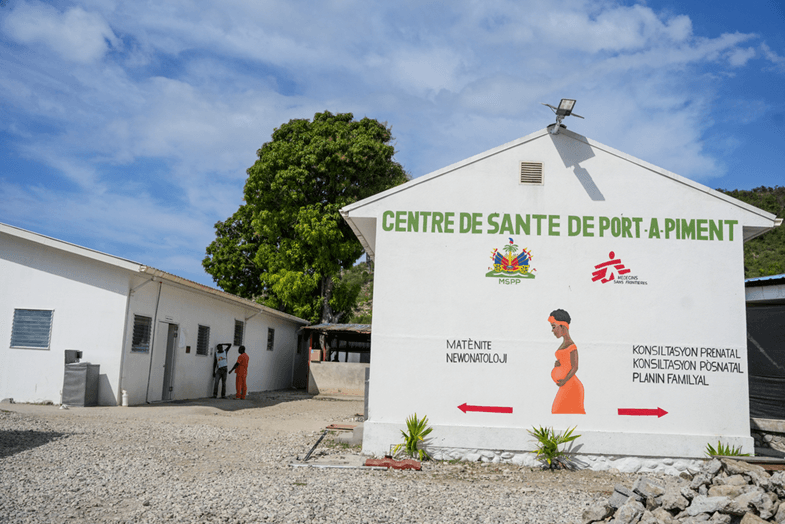
In Port-à-Piment, teams reflected on a difficult reality: large operational budgets supporting relatively small numbers of patient women. Yet numbers alone could not fully capture the medical needs in an already overburdened health system very remote from the highly insecure capital.
There, another issue emerged repeatedly during discussions: the high number of teenage pregnancies. “These conversations forced teams to think differently about what access to care really means,” Wilma explains. “Not just availability of services, but whether people feel they can actually reach and teenage user-friendly.”
One proposed avenue is to increase the link between the community and the health structures around maternal healthcare with traditional birth attendants - local matrons.
Carrefour and Bourdon: rebuilding medical coherence
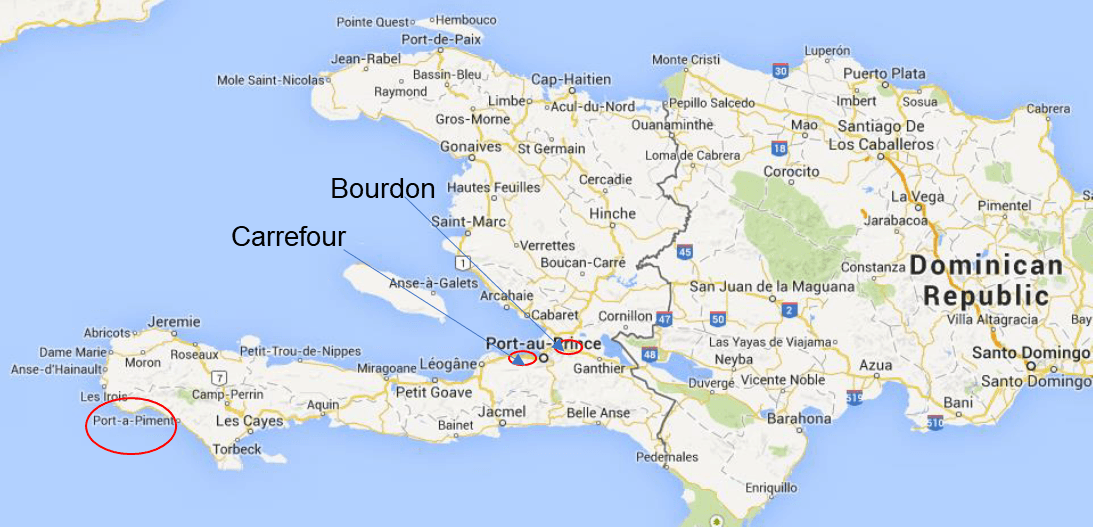
In Carrefour, the context was shaped by increasing insecurity and the gradual closure of health facilities. MSF teams were also navigating difficult perceptions, with the organization sometimes perceived as being too closely associated with certain armed groups.
Carrefour and Bourdon (state-controlled area) both changed from a more trauma-oriented care into more general health services. Carrefour focuses on emergency care and Bourdon on general surgery.
“There was tremendous operational pressure,” Wilma says. “But when everything becomes urgent, strategy can slowly disappear.”
Mental Health Psychosocial Support (MHPSS) and community engagement
In Santo Domingo, discussions focused on Mental Health and Psychosocial Support (MHPSS), with an emphasis on adapting the national mental health policy to integrate community-based psychosocial support. To support this effort, a pilot project was implemented in northern Santo Domingo to generate evidence on this model of care.
The Importance of Data
At the same time, strengthening monitoring systems became a common thread across multiple projects. With epidemiology teams, Wilma worked on defining which patient data should be collected, and, more importantly, why. The objective was not simply to gather more data, but to collect information that could genuinely support medical decision-making.
This work led to discussions around electronic patient records, harmonized data encoding, and improved monitoring frameworks.
Creating space for a long-term planning
Looking back, Wilma does not describe the detachment through immediate operational changes or major announcements. She focuses on creating dialogue where silos existed. On reconnecting medical strategy with project realities. On helping teams move from reacting to anticipating.
In humanitarian settings where crises evolve constantly, those moments of collective reflection can feel secondary. But for Wilma, they are essential.
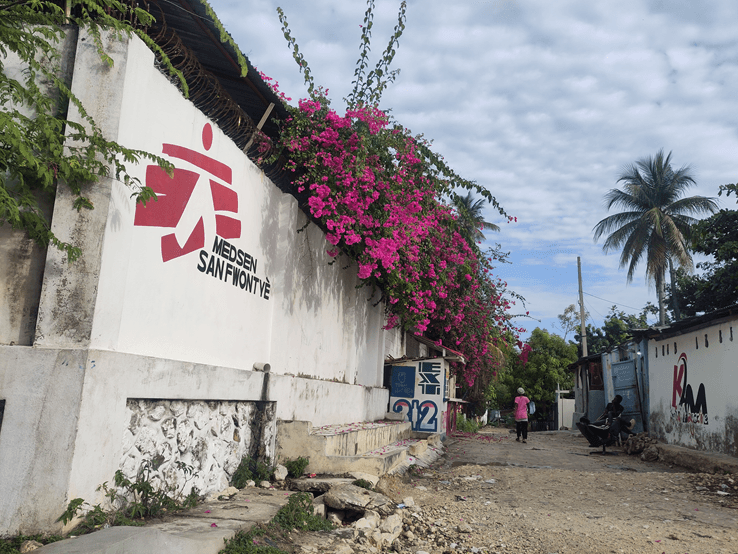
“Operations move fast,” she says. “If we never stop to ask ourselves where we’re going, why we’re doing things, and how we measure impact, we risk losing coherence.”